
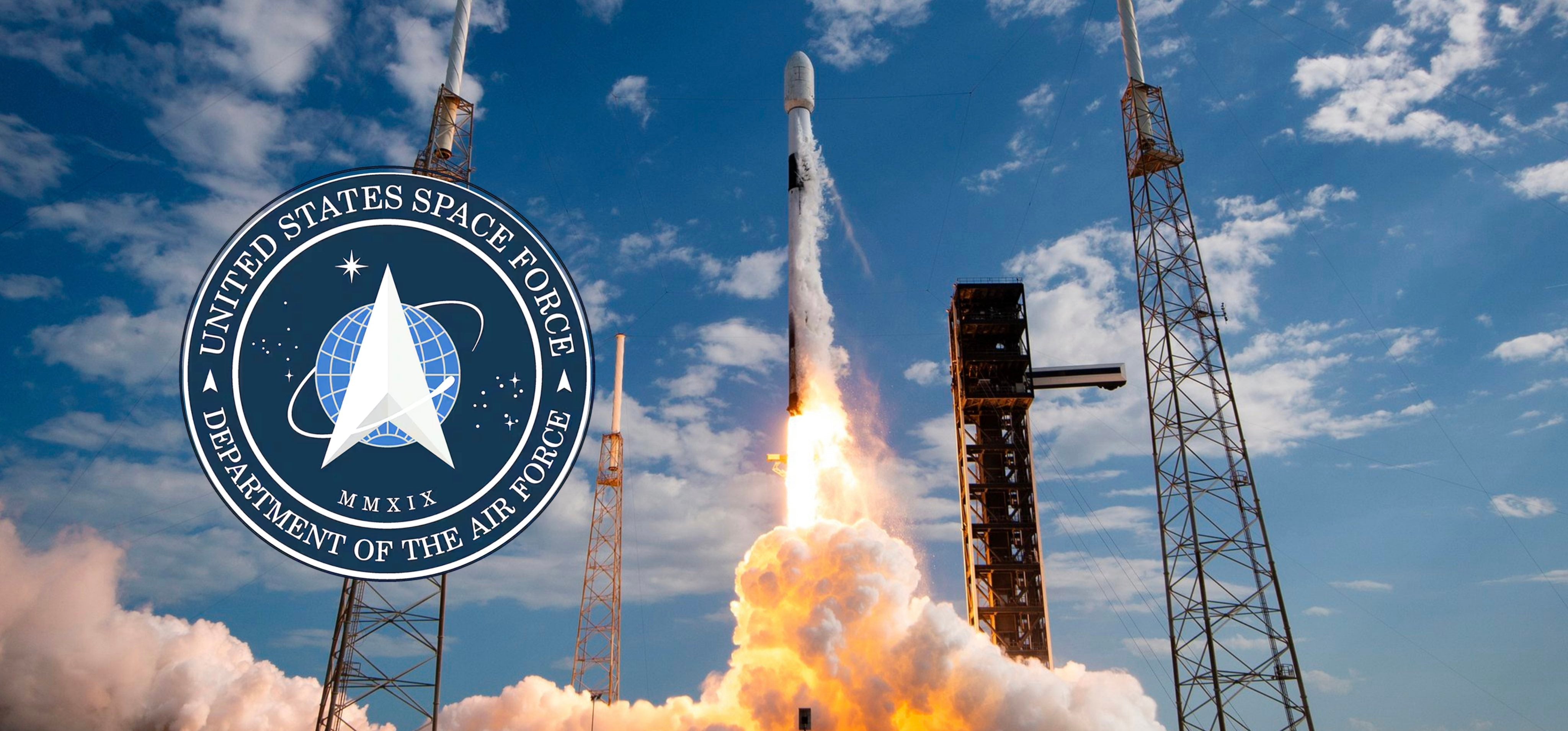
SpaceX has reportedly received a $1.6 billion U.S. Space Force order covering 18 Falcon 9 launches through 2027. The missions are expected to carry Pentagon satellites associated with detecting and targeting airborne objects, according to the report shared by space-industry commentator Nic Cruz Patane. The headline is large, but the more important signal is continuity: Falcon 9 remains the vehicle the government can schedule while newer launch systems mature.
"SpaceX has just been awarded a $1.6 billion contract from the U.S. Space Force for 18 Falcon 9 launches through 2027."
The social post linked the figure to a wire-service report. A separate claim in the same post said SpaceX had received more than $8 billion in Space Force contracts this year; that aggregate was not independently itemized in the official materials reviewed for this article and should not be treated as a directly confirmed total.
An order built on an existing launch pipeline
Space Systems Command had already outlined the underlying demand. In January, it announced nine National Security Space Launch Phase 3 Lane 1 missions supporting the Space Development Agency and National Reconnaissance Office, with a combined value of $739 million. Those assignments included launches for missile-warning and missile-tracking spacecraft as well as an eight-satellite fire-control demonstration. The official notice placed SpaceX missions across fiscal 2026, 2027 and 2028.
The new 18-launch report appears broader than that January package, but it fits the same procurement logic. The Space Force needs repeatable access to orbit, not a single spectacular flight. It is buying a schedule, mission assurance, payload integration and a rocket with years of operational evidence.
Why Falcon 9 still matters in the Starship era
SpaceX's prospectus says Falcon 9 had completed about 620 orbital launches by March 31, 2026, with a mission success rate above 99%. It also says flight-proven boosters had flown more than 540 of the company's missions. Those figures explain the choice better than raw performance. National-security customers value an established production line, known interfaces and a cadence that reduces the consequences of a single delay.
Starship may ultimately carry far more mass at a lower marginal cost, but it has a different job today: proving its architecture. Falcon 9 is the revenue-producing, certified system. SpaceX can therefore pursue a transition without asking defense customers to make the same technical bet at the same time.
The contract is also an industrial-capacity test
Eighteen launches by the end of 2027 would add pressure to a manifest already filled with Starlink, commercial and government missions. Reusable boosters reduce hardware demand, but range availability, second stages, fairings, payload processing and launch crews remain finite. The order therefore tests whether high cadence can coexist with the security and documentation requirements of military payloads.
It also reveals what competition must overcome. A rival does not merely need a rocket capable of reaching the right orbit. It needs certification, launch slots, a reliable supply chain and enough past missions to make schedule risk acceptable. Space Force programs are expanding the pool of eligible providers, but an established system can still win volume when deadlines matter.
The reported $1.6 billion figure will attract attention. The strategic result is simpler: Falcon 9 has become infrastructure for U.S. national-security space. Until another vehicle can match its cadence and record, Starship's rise does not make Falcon 9 less relevant—it may make the older rocket's dependable role even clearer. Mission-by-mission award documents will ultimately show how the reported total is distributed and which payload schedules drive it.
Related EVBASE links
Sources
Nic Cruz Patane - Space Force order report on X
U.S. Space Systems Command - January 2026 NSSL task orders
Congressional Research Service - National Security Space Launch
Share:
Starship Flight 13 Recovery Tests Elon Musk's $100/kg Launch Goal
New Mercedes-Benz GLA EV Targets 350 Miles and 320-kW Charging