
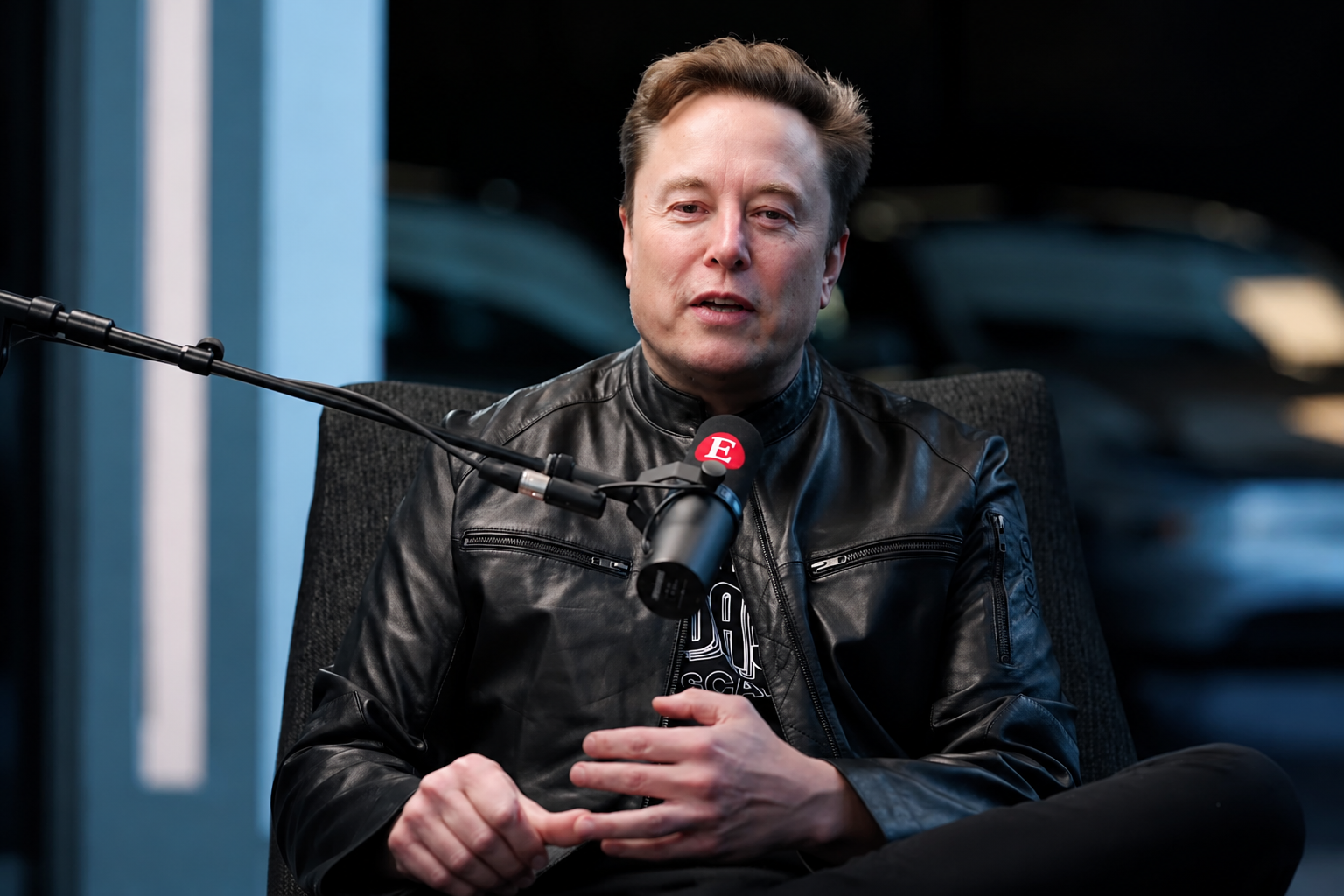
The sharpest moment in The Economist’s new Elon Musk interview was not about Tesla, SpaceX or artificial intelligence. It concerned the dismantling of USAID and a deceptively simple question: did the cuts kill anyone? The magazine promoted the July 23 exchange by saying Musk claimed that nobody died because of the DOGE-led reductions, while editor-in-chief Zanny Minton Beddoes challenged that assertion.
“Elon Musk says zero people died from DOGE cuts to USAID.”
— The Economist on X, July 23, 2026
That sentence is politically explosive because it treats a sprawling humanitarian system like an on-off experiment. In reality, aid programs operate across disease prevention, nutrition, vaccination, maternal health and emergency response. When funding disappears, the causal chain may run from a canceled contract to a closed clinic, then to missed treatment and a later death.
What the record establishes
The Government Accountability Office says the State Department began a reorganization in April 2025 and announced that USAID would cease implementing foreign assistance on July 1 of that year. That confirms a major institutional break. It does not, by itself, calculate mortality. The difficult part is measuring what happened after programs stopped, which services were replaced and which outcomes would have occurred without the cuts.
A peer-reviewed analysis published in The Lancet approached the issue through historical data and forecasting. The researchers estimated that USAID-supported programs prevented roughly 92 million deaths from 2001 through 2021. They then projected that continued steep defunding could produce more than 14 million additional deaths by 2030, including about 4.5 million among children under five. Those are modelled future outcomes with uncertainty ranges—not a verified count of people already killed.
Why ‘zero’ is the wrong kind of certainty
Musk’s claim asks critics to produce individually attributable deaths before accepting that the policy caused harm. That standard is almost impossible to meet in real time. But the opposite mistake is also easy: treating every forecasted death as if it has already occurred. Good reporting has to hold both ideas at once. The absence of a perfect ledger does not prove zero impact, while a projection is not an observed body count.
The argument therefore turns on evidence quality. Useful questions include which programs ended, how many patients lost access, whether governments or charities replaced the services, and whether disease incidence or mortality changed relative to credible baselines. Those questions are slower and less satisfying than a viral clip. They are also the only route to an answer that can survive contact with data.
Near-term reporting should therefore track service indicators before mortality estimates catch up: medication shipments, vaccine coverage, clinic closures, treatment interruptions and disease surveillance. These measures do not answer the final question, but they can show whether the mechanisms that prevent deaths are weakening.
The broader Economist interview covers Musk’s views on AI, China, Europe and his admission that he became too involved in politics. The USAID exchange is revealing because it shows the risk of compressing policy into an engineering-style verdict. Public-health outcomes are delayed, distributed and entangled with other shocks.
The bottom line
The interview does not settle the mortality question. It does clarify the burden of proof. Anyone claiming a precise number—including zero—should explain the dataset, time period, counterfactual and uncertainty. The honest conclusion today is narrower: USAID’s operating role was sharply reduced, researchers forecast severe consequences if the cuts persist, and measuring attributable deaths remains difficult. That is not as tidy as a slogan, but it is much closer to the evidence.
EVBASE reader offer
Use code ev9999 to get 20% off any product at EVBASE.
Browse EVBASE Tesla and EV accessories and confirm model-year compatibility before ordering.
Related EVBASE links
· EVBASE electric-mobility news hub
Sources and further reading
· The Economist—original X post and interview clip
· The Economist Insider—full interview with Elon Musk
· The Lancet—USAID interventions and mortality forecast
· U.S. GAO—changes to USAID and foreign-assistance administration
Share:
Tesla Q2 2026 Earnings Call: Revenue Returns, Margins Tighten and Capex Surges
Why Tesla Cybercab Test Cars Still Have Steering Wheels and Pedals