
Plugging In Is Easy Until You Have to Do It Every Day
Home charging is already one of the easiest parts of owning an EV. Park the car, connect the cable, and start the next morning with a charged battery. For most owners, it is hardly a burden.
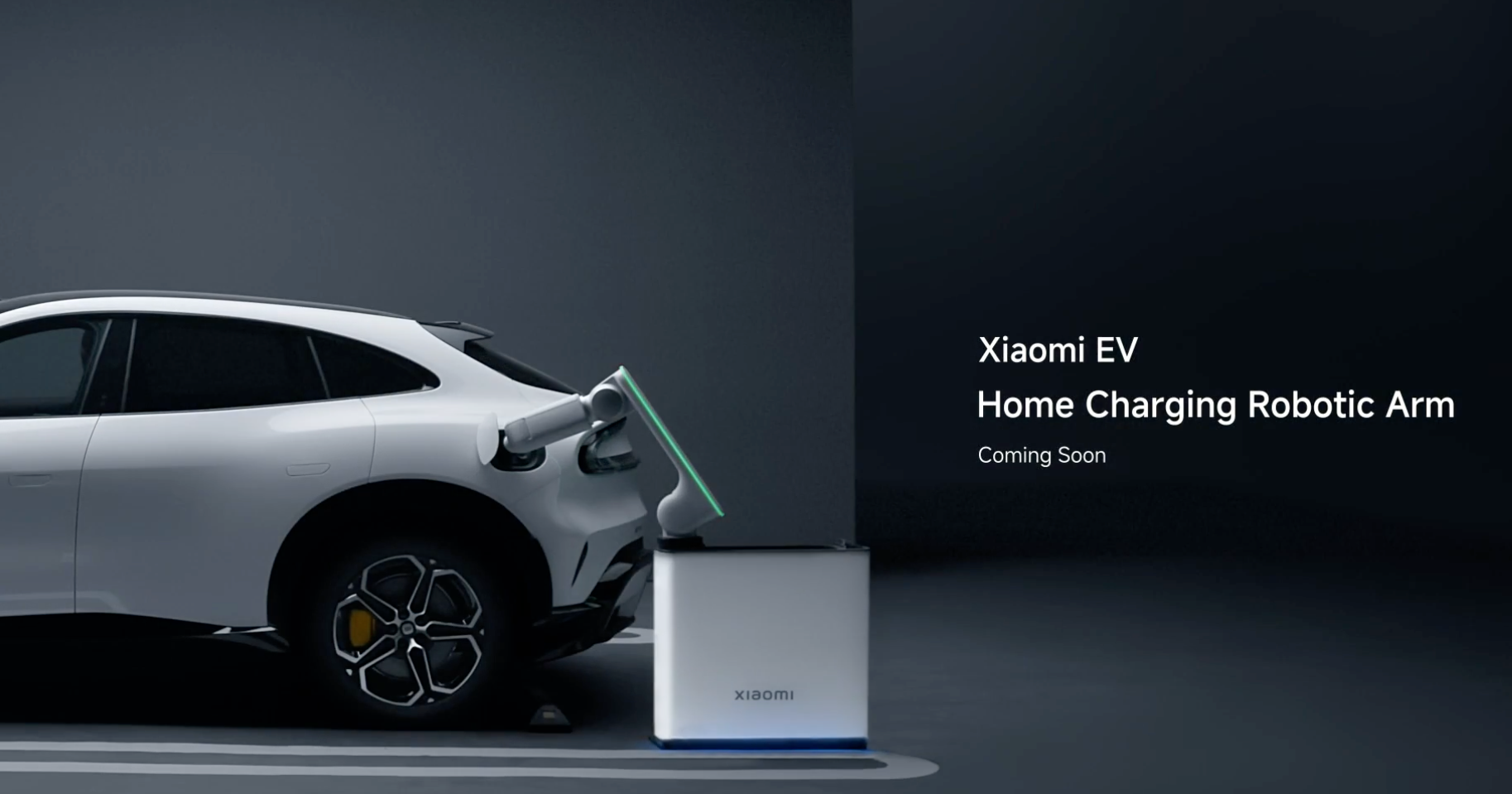
Xiaomi's EV Home Charging Robotic Arm asks whether the owner needs to touch the cable at all.
The arm locates the charge port, lines up the connector, and starts charging. Xiaomi places it inside the company's "Human x Car x Home" system, with controls available on a phone. Paired with automatic parking, the car could park itself and let the garage handle the rest.
This is a lot of machinery for a minor chore. Then again, garage-door openers and robot vacuums also became popular by removing small jobs people repeated constantly.
Automatic Charging Could Help More Than Convenience
The clearest benefit may be accessibility. A robotic connector could help drivers who have limited mobility, weak grip, back pain, or difficulty lifting and positioning a heavy charging cable.
EV connectors are not always easy to reach. They may sit low on the car, collect rain or snow, or become awkward to handle in a tight garage. An automatic arm could make charging possible without that physical step.
The same idea becomes more important for robotaxis, delivery vehicles, and shared cars. A supposedly autonomous fleet still needs people if someone has to plug in every vehicle after a shift. A home garage is a sensible place to develop the technology because the parking space and compatible cars are predictable.
The Charger Fits Xiaomi's Connected Home
Xiaomi is not selling the arm as a standalone garage gadget. The company already makes phones, smart-home products, wearables, and electric cars, so it can connect charging with the rest of the household.
A driver could arrive home, let the car park, and have the arm connect automatically. The home energy system could wait for cheaper electricity, while the owner checks charging status in the same app used for other Xiaomi devices.
The arm itself may be easier to copy than the full setup. The difficult part is getting the car, charger, parking system, app, home network, and energy controls to work together without making the owner troubleshoot them.
That integration can also lock people in. Buyers will want to know which vehicles are supported, whether adapters work, and whether the expensive garage equipment remains useful after they replace the car.
A Garage Is Messier Than a Demo Video
Robotic charging looks simple when the floor is clear and the car is parked perfectly. Real garages contain bicycles, boxes, children, pets, dirt, ice, and cars left slightly crooked. Cameras get blocked and connectors wear.
The arm has to detect people and objects, avoid damaging the paint, confirm a secure connection, and stop safely when something goes wrong. It also needs a way to release the cable during a power or network failure.
Connection speed barely matters at home. Reliability matters a lot. A system that succeeds 95% of the time would still fail often enough for owners to find an uncharged car on mornings when they need it.
Price will decide whether the product goes beyond luxury garages. A costly installation that supports one Xiaomi model will have a narrow market. Compatibility with several vehicles and ordinary wall chargers would make it much easier to justify.
The Best Version Would Be Easy to Forget
EV charging is already becoming more automatic. Plug-and-charge removes payment steps, software shifts charging to cheaper hours, and parking systems can place the car accurately. A robotic connector completes the physical part.
Xiaomi's arm will not make a normal cable obsolete. Cables are inexpensive, dependable, and easy enough for most drivers. The product is more interesting as an example of an automaker designing the garage as part of the ownership experience.
Ideally, the owner would stop thinking about it. The car would park, connect, charge at the right time, and send an alert only when something went wrong.
That is a better test than how futuristic the arm looks in a video.
Share:
Giga Texas Flyover Shows Nine Cybercabs Preparing for Austin Testing
A 73-MPH Tesla Crash, but Who Was in Control?