
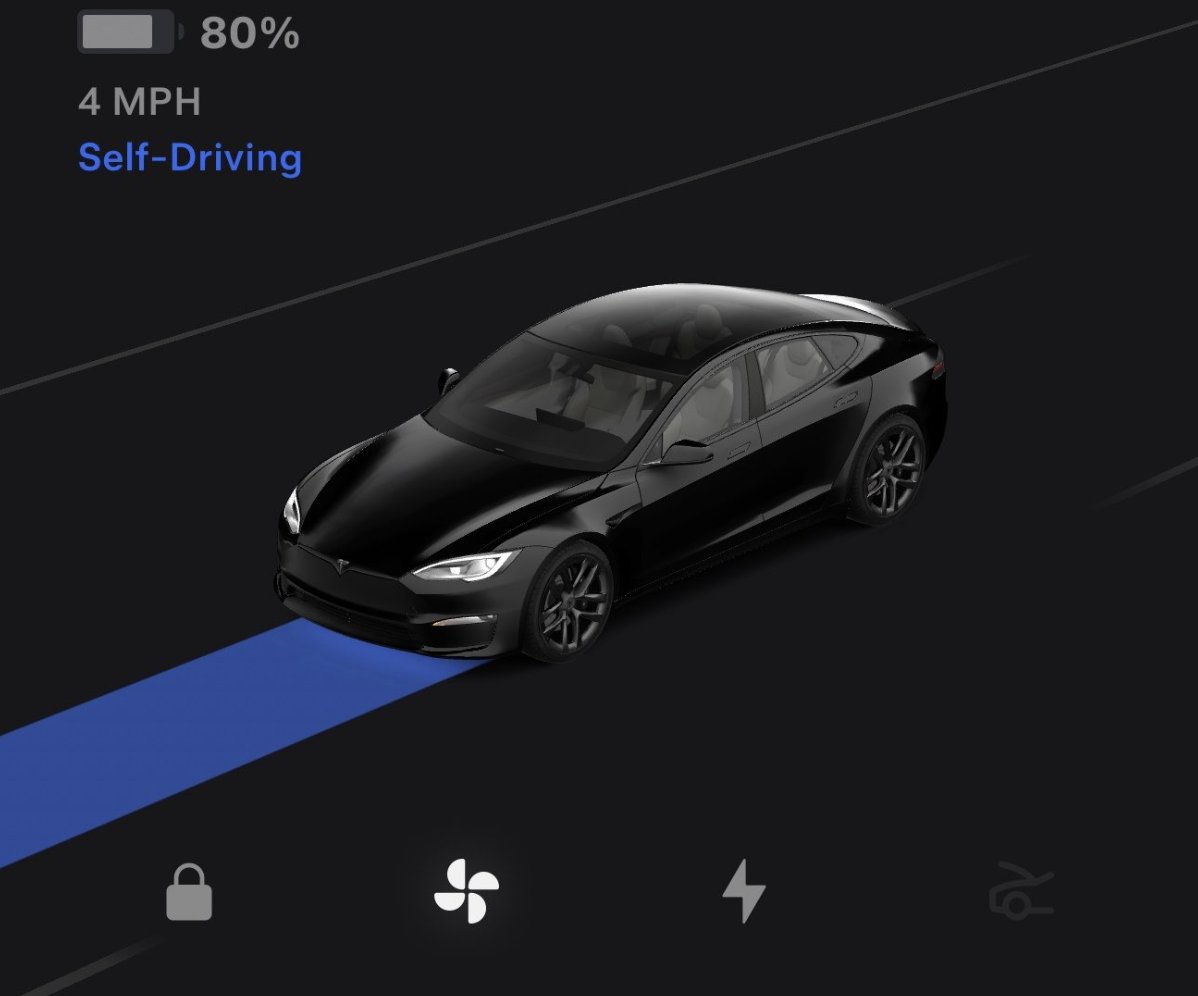
Tesla owners can already check a vehicle's location in the mobile app. With Full Self-Driving (Supervised) active, the map can now show the route in blue, according to an update noted by Tesla reporter Sawyer Merritt.
The feature has appeared with vehicle software version 2026.20.6.1 and uses the same color Tesla displays inside the car. It does not let anyone control FSD from a phone, and it does not make the vehicle autonomous. It simply shows that FSD is handling the route under driver supervision.
A clearer status for people outside the car
Previously, the app could show that a Tesla was moving without saying whether the driver was steering manually or using FSD. The blue route adds that missing piece of information at a glance.
That may be useful when a family member or another authorized driver has the car. A passenger can also check the trip without looking at the center screen. The person in the driver's seat must still pay attention, but the operating mode is now easier for others to understand.
Tesla already uses blue to identify an active assisted-driving path in the vehicle visualization. Repeating that color in the phone app keeps the two displays consistent, so owners do not have to learn a second status indicator.
FSD updates also need clear communication
Most FSD updates are judged by how the car handles turns, merges, pedestrians and difficult intersections. Driving behavior remains the main safety issue, but users also need to know when the system is active and what it is doing.
Tesla has been building more of that information around FSD. The newer Self-Driving app in the car groups subscriptions, tutorials and usage details in one place. Showing the blue route on a phone brings a small part of that experience outside the center touchscreen.
Driving software and interface design solve different problems. Changes to the neural network and vehicle controls affect how the car moves. Interface updates help drivers and passengers understand and supervise those actions. Technical improvements are harder to trust when the system's status is unclear.
Why this could matter for shared vehicles
The blue route becomes more useful when several people share a Tesla or monitor a trip remotely. FSD (Supervised) still requires a responsible driver, but future ride-hailing services will need clear information about route progress and vehicle status.
This update is far from a remote Robotaxi control center. Still, it establishes a simple pattern for showing driving status on another device. Later versions could add pickup progress, arrival notices, alerts for unexpected stops or a direct link to support.
More remote information will also raise privacy questions. Drivers should be able to see who has access to the route and FSD status, especially when several people can use the same vehicle through the app. Tesla will need to keep those permissions easy to understand.
A small part of the wider FSD product
The blue route does not change how a Tesla drives through traffic. Its job is simpler: it lets an owner see when FSD is being used during an everyday trip.
That fits Tesla's broader software approach. Large driving updates receive most of the attention, while smaller safety and interface changes shape how the feature works in daily use. Both matter if FSD is to feel like a finished product rather than a permanent experiment.
For now, the blue line is a status indicator and little more. Even so, it closes a real information gap between the vehicle and the owner's phone.
Sources
- Sawyer Merritt, Tesla app FSD blue-route feature: https://x.com/SawyerMerritt/status/2073869243330728429
- Tesla, Full Self-Driving information: https://www.tesla.com/fsd
- Tesla, Q1 2026 Update: https://electrek.co/wp-content/uploads/sites/3/2026/04/TSLA-Q1-2026-Update.pdf
- BASENOR, Tesla App Now Shows FSD Blue Route in 2026.20.6.1: https://www.basenor.com/blogs/news/tesla-update-2026-20-6-1
Share:
Tesla FSD Could Get a New Path in Europe