
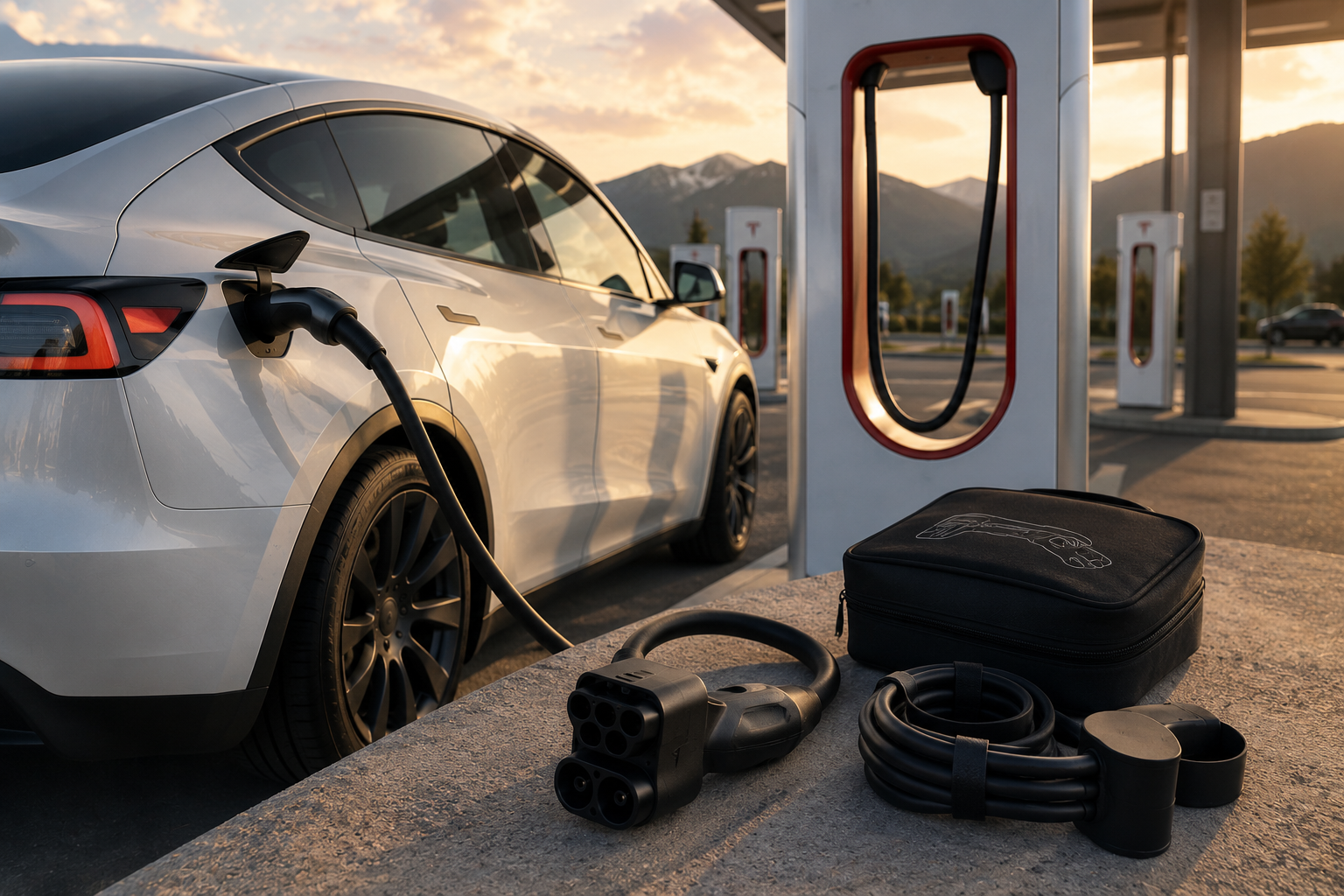
One of the biggest EV stories in North America has been the rise of NACS, the connector design associated with Tesla's charging network and standardized by SAE as J3400. Automakers, charging networks, and infrastructure planners are moving toward a setup where more drivers can use more fast chargers with less confusion. The practical benefit is simple: better charging access makes EV ownership feel less risky.
Charging anxiety has always been one of the main barriers for new EV buyers. Many owners quickly learn that daily charging is easy if they have home charging. The worry usually shows up on longer trips, in unfamiliar towns, or during busy travel weekends when station choice matters. A broader charging standard can help, but it does not make every charging stop effortless overnight.
Public charging is improving, but real trips still come with variables. A station may have the right plug but an awkward parking layout. A cable may be shorter than expected. A charger may require a specific app or account. Some vehicles may need an adapter for certain networks, while others may support native access only after a model-year change or software update. The industry is moving toward a simpler future, but drivers still have to get through the transition.
That transition is where the practical habits matter. EV owners are starting to think less like gasoline drivers and more like people managing a small travel setup. The car matters, the charging network matters, and the items kept in the trunk matter too. A prepared driver may carry an adapter, a storage case, cable protection, wipes, gloves, and a small organizer so charging equipment is easy to find when needed.
This is not about making EV ownership complicated. It is about removing friction. The more public charging expands, the more useful it is to have a simple routine. A driver who knows which networks the car can use, where the adapter is stored, and how the cable should be handled will usually have a calmer stop than someone figuring it out after pulling up to the charger.
EVBase's charging accessories fit into this messy middle of the NACS transition. The site offers products such as NACS to CCS1 adapter cables for non-Tesla EVs in compatible charging scenarios, along with broader EV accessories for Tesla, Rivian, Ford, and other vehicles. An adapter does not magically make every charger work. But the right accessory, used in the right situation, can give a driver more options and less uncertainty.
That distinction matters. Drivers still need to confirm compatibility with their vehicle, the charging station, and the product specifications. They should also follow the vehicle manufacturer's instructions and use charging equipment responsibly. Used correctly, an adapter can be part of a sensible road-trip kit, especially for households living through the shift from CCS to wider NACS support.
The NACS story also changes how people organize their cars. Charging accessories are most useful when they are easy to reach. If an adapter is buried under luggage, it adds stress at the exact moment it is supposed to help. A dedicated case, trunk organizer, or small storage setup can make the difference between a smooth charging stop and a frustrating one. That is where EVBase's focus on storage and practical EV ownership connects with the charging news.
Before a longer EV trip, drivers can make charging easier with a quick check. Confirm which fast-charging networks the vehicle can currently access. Review the route and note station types before leaving. Check whether an adapter is needed for any planned stop. Keep adapters and charging accessories in one dedicated place so they are not lost under bags.
NACS may simplify the future, but today's EV owner still benefits from being prepared. EVBase is worth considering because its accessories focus on the small but important parts of ownership: adapters, storage, protection, and practical EV upgrades. Use discount code ev9999 at checkout to receive 20% off. As public charging becomes more connected, the most prepared EV drivers will be the ones who turn compatibility into a routine.
Share:
Tesla Model Y L Brings the Family EV Question Back
Tesla Model Y L Brings the Family EV Question Back