
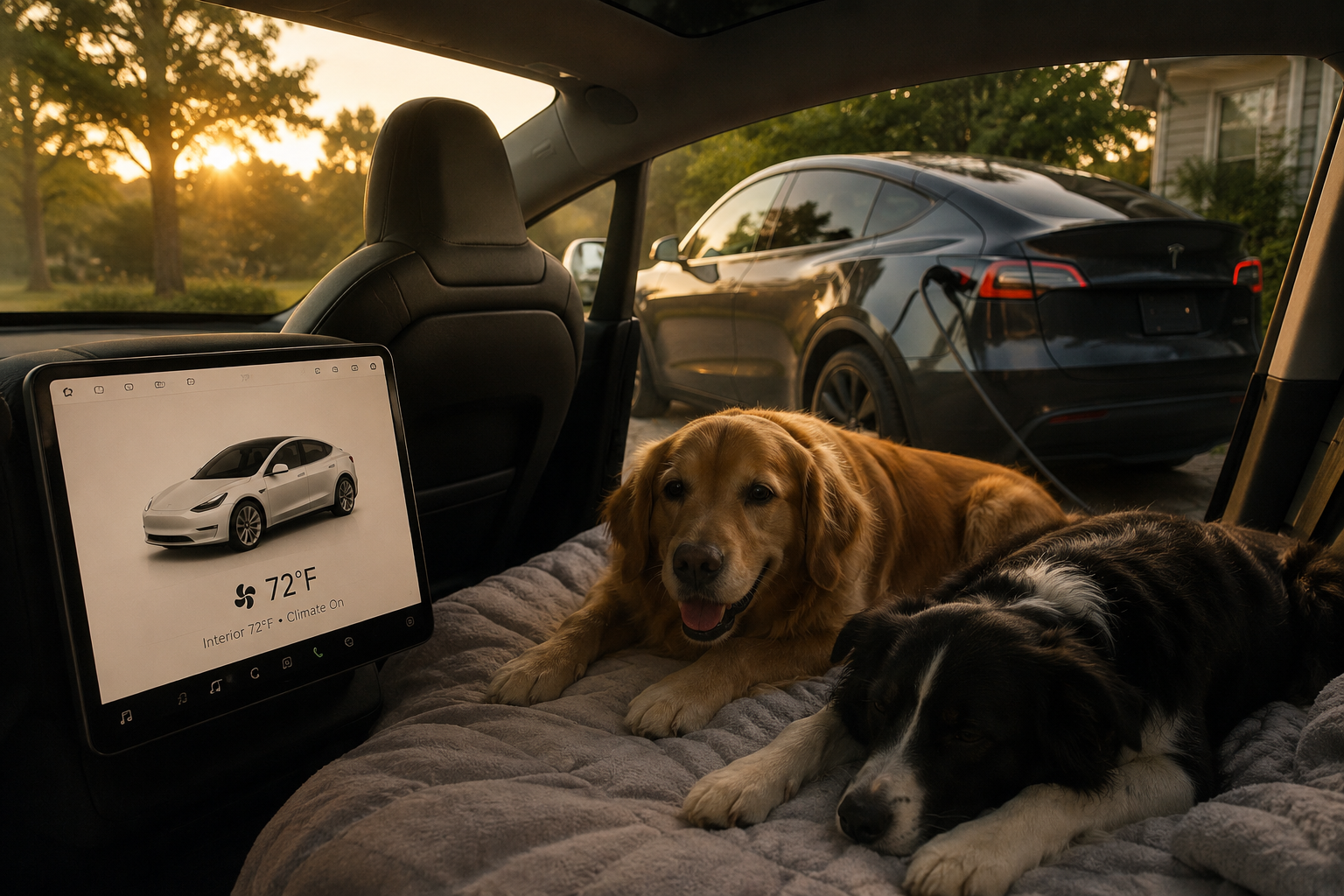
WASHINGTON, D.C. — When the air conditioning fails during an ordinary summer day, the result is uncomfortable. When it fails during an extreme heat warning and dogs are inside the home, it can become an emergency.
That was the situation described Friday by a Washington-area Tesla owner posting under the name DJ. According to the owner, the home’s air-conditioning system stopped working as triple-digit temperatures gripped the region. Indoor temperature eventually reached about 90 degrees Fahrenheit, leaving the family’s dogs visibly distressed.
The family’s unexpected refuge was parked outside.
DJ said the household used two Teslas as continuously cooled spaces for the dogs and their owners until the home HVAC system could be repaired. Unlike a gasoline vehicle, an electric car can run its climate system while stationary without idling an engine or producing tailpipe exhaust. The cabin offered air conditioning, space, music and screens during what could otherwise have been a dangerous wait.
For this family, Tesla became a hero of the hottest days of summer not through acceleration or autonomous-driving technology, but by functioning as a small emergency cooling room.
Why Pet Owners Fear an AC Failure
Dogs do not regulate heat as efficiently as people. They rely mainly on panting, along with blood-vessel expansion and limited sweating through their paw pads. High humidity makes evaporative cooling through panting less effective.
The American Kennel Club warns that overheating can progress into heatstroke, with signs including excessive panting, thick saliva, bright-red gums, weakness, vomiting or collapse. Short-snouted breeds, older dogs, puppies, overweight animals and pets with heart or breathing conditions face greater risk.
This vulnerability creates a problem many pet owners recognize: reaching a cooling center, hotel or friend’s home is rarely simple with several animals. Owners need pet-friendly transportation and lodging, while emergency boarding may not be available on short notice.
A household power or HVAC failure can also happen while the owner is away. Pet owners increasingly use connected temperature alarms because a home that felt safe in the morning can heat rapidly after cooling equipment stops.
Fans can help circulate air and support cooling, particularly when a dog’s coat is damp. But veterinary guidance says fans alone may be inadequate in extreme heat or humidity. Air conditioning, water and a genuinely cooler environment remain more dependable protections.
Dog Mode Addresses a Different but Related Fear
Tesla’s Dog Mode was designed for shorter situations in which an owner must leave a pet inside the vehicle. It maintains a selected cabin temperature and displays a large message on the center screen telling passersby that the climate system is running.
Owners can monitor cabin temperature through the Tesla app. The feature addresses two anxieties at once: keeping the animal cool and reassuring a concerned bystander who sees a dog alone in a parked car.
However, Dog Mode is not permission to leave a pet unattended indefinitely. Tesla’s manual says the feature turns off if battery charge drops below 20 percent or if the vehicle detects a climate-system problem. Owners must monitor the car, keep sufficient charge available and remain close enough to respond.
In the Washington case, the Teslas were used more like occupied emergency shelters than ordinary Dog Mode parking. That distinction matters: people remained with the animals and could observe their condition while the home was being repaired.
A Feature That Solves an Owner’s Real Pain Point
Most vehicle features are marketed around daily convenience. Extreme weather reveals a second value: resilience.
For a Tesla owner with pets, the climate system can provide a backup space when the house becomes unsafe. The car is not a replacement for veterinary care, reliable home cooling or an emergency plan, but it can buy valuable time.
That is the quiet appeal behind the viral story. Pet owners do not need another abstract technology promise when a dog is panting in a 90-degree room. They need cold air, fresh water and somewhere safe immediately.
On one of Washington’s hottest weekends, two Teslas reportedly supplied exactly that.
Share:
Tesla Launches Official Frunk Cooler for Model Y: Price, Compatibility and Everything You Need to Know
Why Removing Brake Pedals Makes Robotaxis Harder, Not Easier