
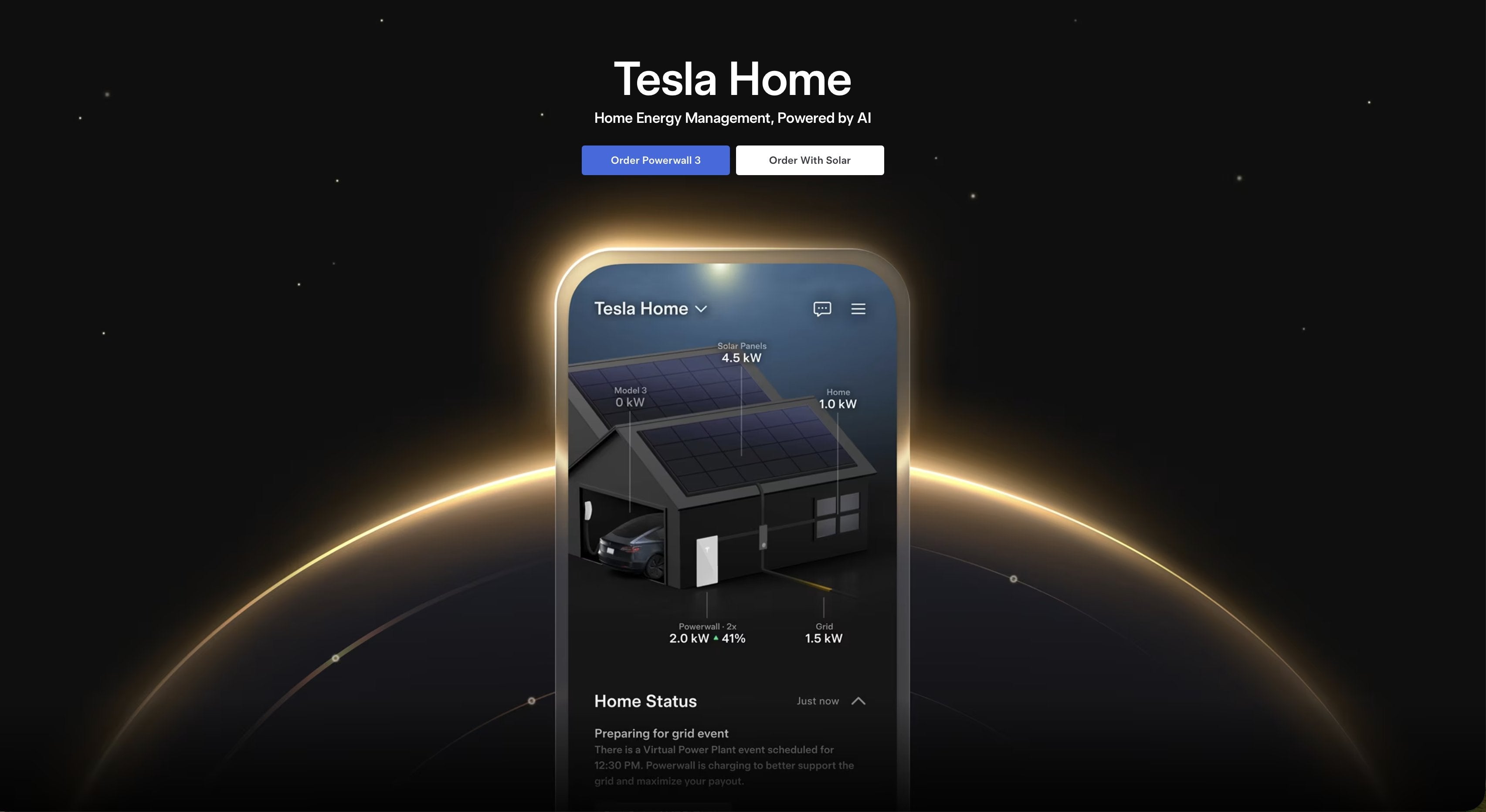
Tesla is positioning Powerwall as more than an outage backup. Tesla Home uses Opticaster software to forecast solar output and household demand, then decides when to store energy, use it or buy power from the grid.
The system comes with Powerwall and runs through the Tesla app, according to an overview shared by Tesla-focused reporter Sawyer Merritt. Once configured, it can make daily energy decisions without the owner changing settings throughout the day.
The financial case comes from several different parts of a home's electricity bill.
Use less grid power during expensive hours
Customers on time-of-use plans can pay very different rates over the course of a day. Electricity may be cheapest overnight and much more expensive during the late-afternoon peak.
Tesla Home can charge Powerwall when grid rates are low and use the stored energy when prices rise. This may not reduce the home's total electricity consumption because charging and discharging a battery loses some energy. The saving comes from buying fewer kilowatt-hours at the highest rate.
A larger gap between peak and off-peak prices creates more room to save. Customers on a flat rate may see less benefit because moving consumption to another hour does not change what each kilowatt-hour costs.
Keep solar energy for the evening
Rooftop solar often produces the most power around midday, when household demand is low. Without a battery, the unused electricity flows to the grid. Its value depends on how much the utility pays for exports.
If the export credit is lower than the evening retail rate, storing midday solar can be worth more than selling it. Powerwall can release that energy after sunset, increasing the amount of solar used at home and reducing later grid purchases.
Tesla Home lets users prioritize either financial savings or self-powered operation. Those settings do not always produce the same result. A household seeking more independence may keep and use energy differently from one focused only on utility prices.
Charge an EV when energy is cheapest
EV charging is one of the largest loads a household can move to another time. Tesla Home's Rate Plan Charging feature can schedule a compatible Wall Connector for low-price hours. Charge on Solar can send excess rooftop production to a Tesla instead of exporting it.
That allows the car to use cheaper grid power or solar energy that might otherwise earn a low export credit. The better choice depends on driving plans, overnight rates and the value of exported solar.
Grid programs may add bill credits
In some regions, Powerwall owners can join a virtual power plant or electricity plan that pays them for sending stored energy to the grid during periods of high demand. Tesla Electric, for example, offers credits to eligible Powerwall customers in parts of Texas.
These programs can improve the economics, but the rules vary by location and may require owners to reserve some battery capacity for the grid. Compensation can also change, so the credits should not be treated as guaranteed income.
Settings make a difference
Owners should first enter the correct utility plan in the Tesla app. Wrong peak hours or incorrect import and export prices can cause the system to optimize against costs that do not match the actual bill.
The next choice is the energy goal and Backup Reserve. A higher reserve keeps more battery capacity ready for an outage, leaving less for daily rate shifting. A lower reserve may increase savings but shorten the available backup time.
Owners should compare several utility bills with data from the Tesla app, including grid imports, exports and peak use. Fixed connection fees, taxes and demand charges may remain even when energy purchases decline.
Which homes are most likely to save?
The strongest case is usually a home with a large peak-rate spread, low solar export credits and regular evening demand. An EV or access to a virtual power plant can add more value. Homes with flat rates, generous net metering or low electricity use may save less.
Equipment cost still matters. Tesla Home can improve the operation of a Powerwall that is already installed, but software savings do not automatically justify buying a new battery. Buyers should compare the installed price with conservative annual savings and separately consider what outage protection is worth to them.
Tesla Home automates decisions that would be tedious to make every day. It cannot change a utility tariff, but it can reduce purchases during the most expensive hours, make better use of rooftop solar and show owners where their electricity costs come from.
Share:
Hundreds of Tesla Model Y L Vehicles Reach Japan After Record June Registrations
Rivian Plans 75 Million-Share Offering to Raise Cash and Meet DOE Funding Commitments