
A Factory Makes Optimus Harder to Treat as a Demo
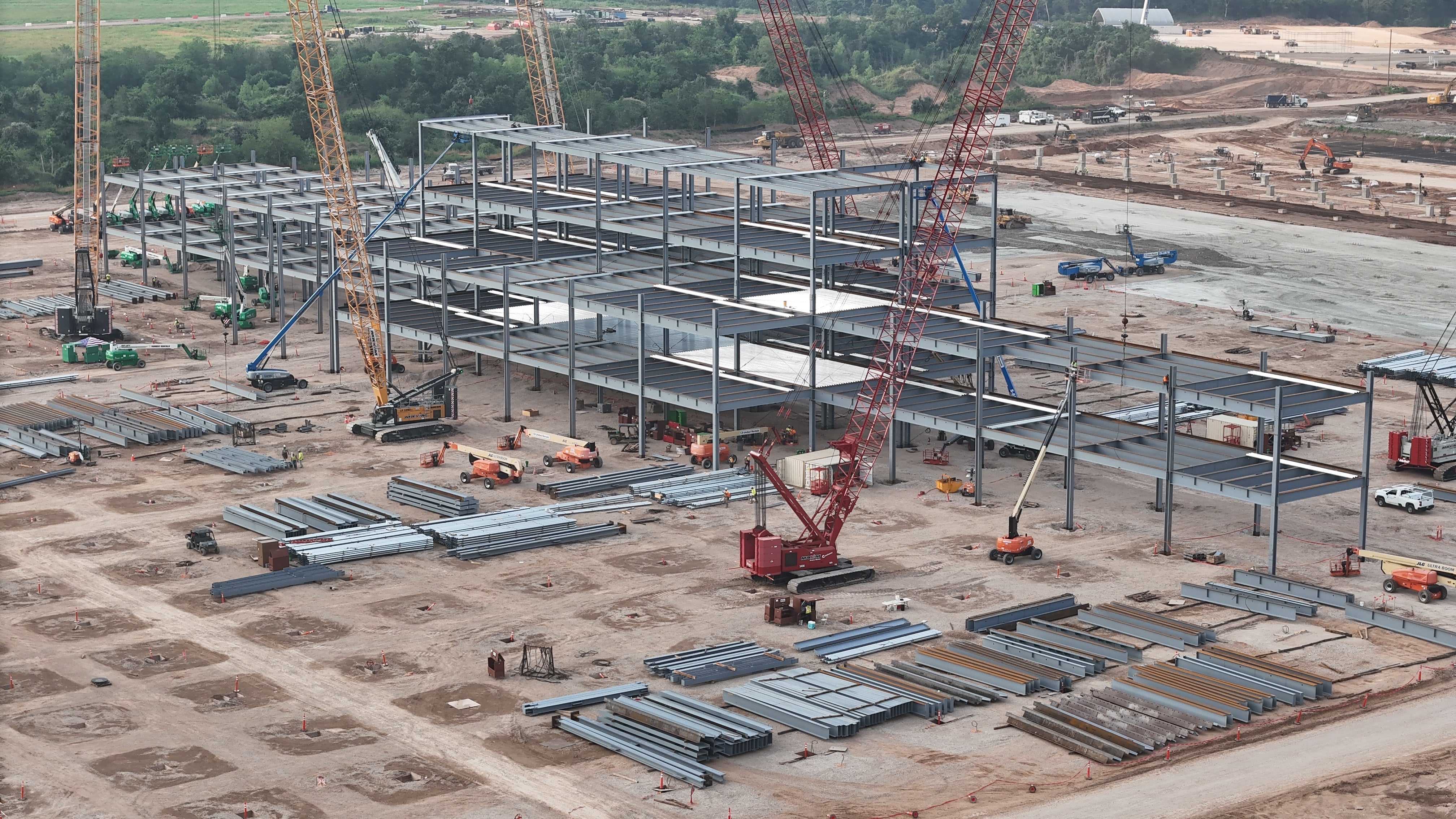
Recent videos show fast construction progress at Tesla's new Optimus factory. The speed is impressive, but the larger commitment is the money, equipment, floor space, and management time Tesla is putting behind a product that has not yet proved itself commercially.
Humanoid robot demos have looked convincing for years. Robots can walk, carry boxes, sort objects, and complete rehearsed tasks. Building thousands of machines that can perform useful work every shift is a much harder problem.
A dedicated factory does not guarantee Tesla will solve it. Companies can finish buildings before the product is ready. It does force the Optimus program toward measurable questions about production, reliability, repair costs, and actual work completed.
The Hardware May Be Harder Than the AI
AI attracts most of the attention, but a humanoid robot is also a complicated machine. It needs compact actuators, durable joints, sensors, batteries, cooling, capable hands, and a body that can survive bumps and falls in a working factory.
Every part has to be consistent and affordable. A hand that takes hours to calibrate slows the line. An actuator that wears out after a few months can ruin the economics of deploying the robot.
Production exposes problems that a small engineering fleet can hide. Once Tesla builds hundreds or thousands of units, it can measure variation, identify common failures, redesign awkward parts, and standardize repairs.
For Optimus, the factory is likely to be a development lab with a production line inside it.
Tesla Can Test the Robots in Its Own Plants
Tesla did not invent the humanoid robot. Its strongest case is that it already builds products combining batteries, motors, power electronics, cameras, software, and large-scale assembly.
It also has a convenient first customer: Tesla itself. A robot moving materials or doing repetitive work in a Tesla plant has a narrower job than a household assistant. The area can be mapped, the task can be controlled, and its performance can be compared with an existing process.
That gives Tesla room to start small. It can assign Optimus a limited task, collect operating data, improve the hardware, and add more work only when the robot is ready. It does not need to cook dinner or fold laundry to be useful in a factory.
Tesla may also design major components and the manufacturing equipment together. That could reduce cost, but it leaves the company responsible for solving every custom-part problem that appears on the line.
The Production Line Will Reveal the Weak Spots
Construction footage can make mass production feel close. Finishing the building is much easier than producing dependable robots at a steady rate.
Yield will be one of the first tests. How many robots pass inspection without major rework? Durability comes next. How long do the hands, joints, sensors, and batteries last? Then there is productivity. How much of each hour does the robot spend working rather than charging, recovering from an error, or waiting for help?
The cost calculation has to include more than the purchase price. Maintenance, human supervision, charging, software support, spare parts, and downtime all affect whether a robot saves money.
Safety is just as basic. Optimus has to stop reliably, fail in predictable ways, and avoid turning a software mistake into an injury.
The Numbers Worth Watching
The useful Optimus milestones will be fairly unglamorous: hours worked per robot, intervention rates, production yield, repair time, parts replaced, and repeat orders from paying customers.
The factory's fast construction shows that Tesla is in a hurry. Once equipment starts running, the company will have to talk less about future potential and more about current output.
If Tesla can build reliable humanoid robots at high volume, the factory could become a major new business. If it struggles, the failures will still make one point clear: robotics is not won in a polished demonstration. It is won on the production line and during the thousandth hour of work.
Share:
Giga Texas Flyover Shows Nine Cybercabs Preparing for Austin Testing
A 73-MPH Tesla Crash, but Who Was in Control?