
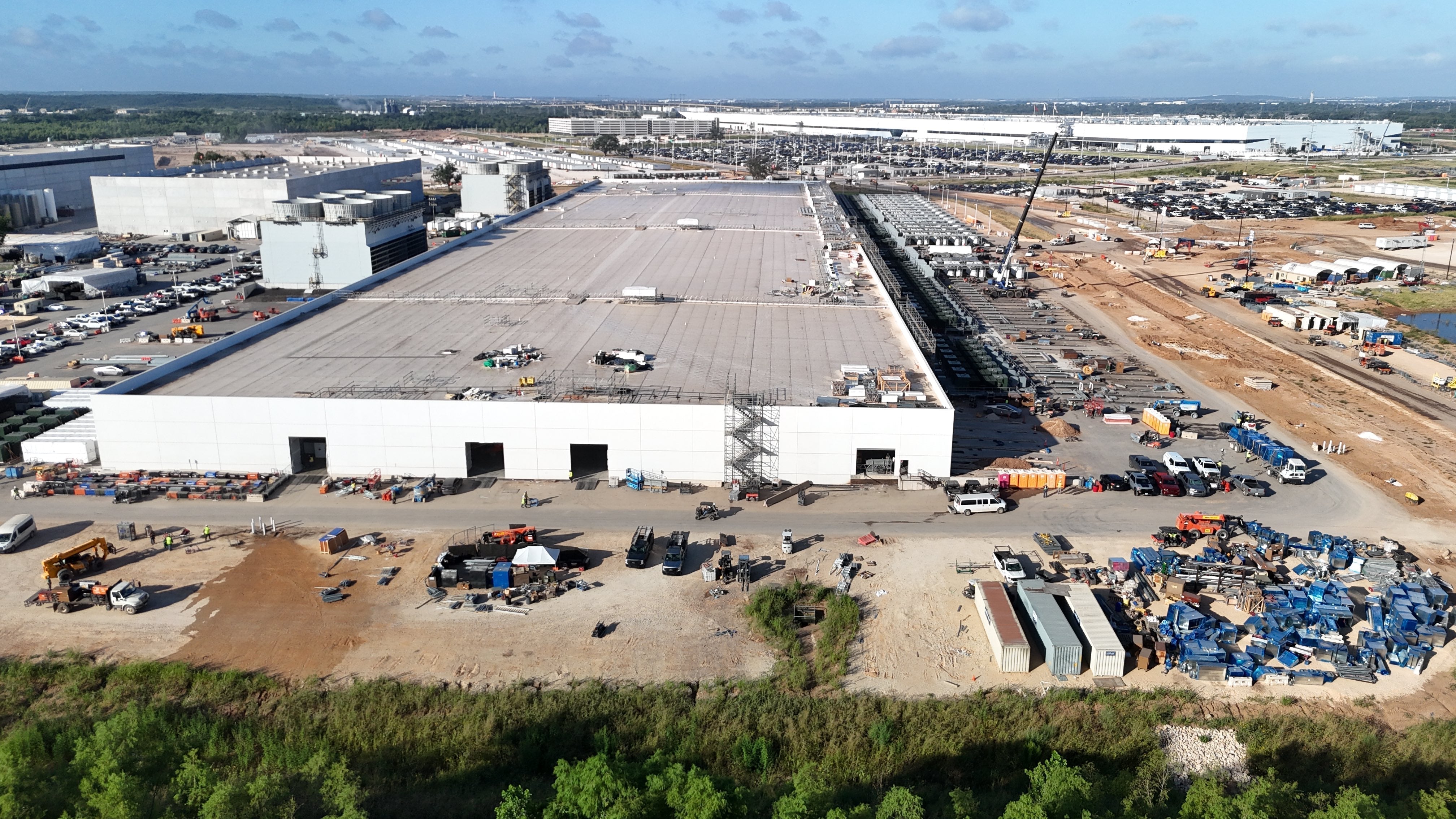
Tesla Optimus factory construction appears to be accelerating at Giga Texas, based on a July 8 flyover update from longtime drone observer Joe Tegtmeyer. His latest snapshot showed more structural steel around the Optimus area, foundation preparation at the E Advanced Chip Fab site, River Road extension work, new workshops, receiving-dock changes, and cobblestone sections added to the test track for noise, vibration, and harshness testing.
This is not an official Tesla construction update, so it should be treated as an outside visual check rather than a formal production schedule. Even so, the mix of projects is hard to ignore. Giga Texas is no longer only a Model Y and Cybertruck story. The site is starting to bring vehicles, AI hardware, robotics, and testing work into the same physical footprint.
Why a dedicated Optimus factory matters
The most important signal is visible progress around the Tesla Optimus factory itself. Tesla has presented Optimus for years as a future product for industrial work and, eventually, wider commercial use. The difficult part is scale. A robot demonstration can attract attention; volume production requires steel, tooling, logistics, workers, utilities, and a repeatable assembly process.
That is why construction signals matter. If Tesla is giving Optimus real factory space and moving structural work forward, the project is shifting from prototypes and software demos into manufacturing planning. Investors can still argue about when Optimus becomes commercially meaningful, but a dedicated buildout changes the question: can Tesla build many of them at a cost that works?
How Tesla's chip fab fits the AI plan
The mention of E Advanced Chip Fab foundation preparation also matters. Tesla's autonomy and robotics plans depend on compute. Vehicles need inference hardware. Training systems need data-center scale. Robots may need more specialized hardware as the product develops.
That does not mean every chip-related structure at Giga Texas will immediately make finished silicon. Tesla still needs to confirm the exact purpose and timeline. The direction, though, is clear enough: Tesla wants more control over the physical infrastructure behind autonomy, robotics, and AI manufacturing.
For a company trying to build cars, robotaxis, energy products, and humanoid robots, chip infrastructure is not a side project. It sits inside the production stack.
Cybercab and Optimus share the same campus
The same flyover also mentioned many Cybercabs on site. That matters because Cybercab and Optimus may eventually share more than a campus. Both are autonomy products. Both rely on Tesla's AI software. Both need manufacturing methods that do not look exactly like traditional auto production.
Cybercab is a vehicle, but it is also the hardware base for Tesla's robotaxi service. Optimus is a robot, but it is also a test of whether Tesla can turn AI into physical work. As both programs mature at Giga Texas, the factory starts to look like Tesla's main test site for AI manufacturing.
The test track work fits that picture too. Cobblestone NVH sections sound dull, but they help engineers test noise, vibration, harshness, durability, and ride quality over rough surfaces. For autonomous vehicles carrying paying passengers with no driver present, that kind of boring ride-quality work matters.
What could confirm Optimus production progress
The next question is not whether Giga Texas is busy. It clearly is. The question is which construction projects turn into validated output.
For Optimus, watchers should look for installed equipment, material flow, pilot assembly work, and Tesla comments about unit volume. For Cybercab, the important signals are fleet testing, regulatory filings, service-area expansion, and proof that design choices are moving toward manufacturable production.
Tegtmeyer's July 8 update is useful because it shows the factory in motion. It does not prove production targets. It does show Tesla preparing Giga Texas for more than passenger-vehicle assembly. If Optimus is going to become a real product, this kind of plain factory growth is where the story starts.
Sources
Joe Tegtmeyer, July 8 Giga Texas flyover update: https://x.com/JoeTegtmeyer/status/2074872589680250978
Tesla, AI and Robotics: https://www.tesla.com/AI
Tesla, Giga Texas official page: https://www.tesla.com/giga-texas
Tesla, Q4 2025 Update: https://electrek.co/wp-content/uploads/sites/3/2026/01/TSLA-Q4-2025-Update.pdf
Share:
Why Would Tesla Give the Cybercab Front-Wheel Drive?
New Jersey Robotaxi Bill Challenges Tesla's Camera-Only Plan