
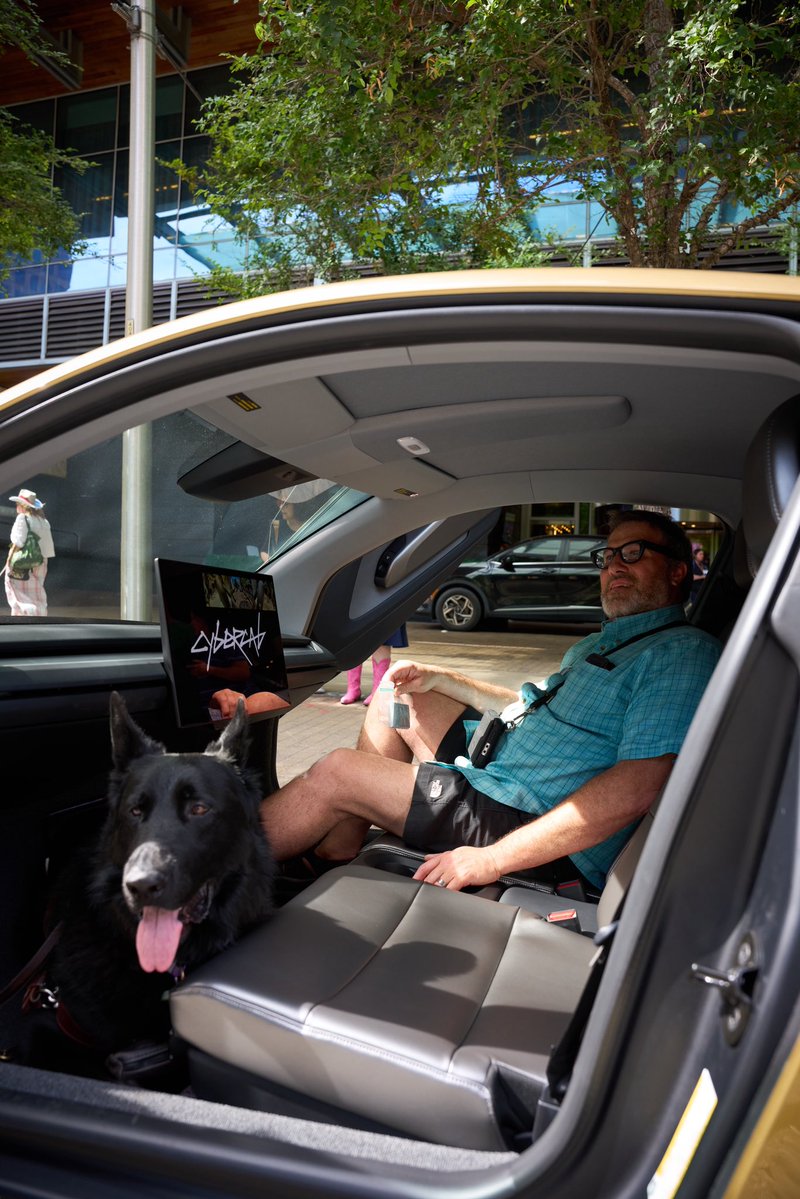
Tesla has provided a closer look at the accessibility features planned for Cybercab. Much of the attention is on small physical controls that blind and low-vision passengers can identify by touch.
A video posted by Tesla's Robotaxi account shows Braille labels, dedicated buttons and cabin space for a service animal. The design addresses a practical problem for driverless service: tasks that a taxi driver once helped with must now be handled by the vehicle and app.
A Robotaxi cannot depend on help from a driver
A taxi driver can identify the car at the curb, explain how the door opens or help a passenger find a seat belt. Cybercab will not have that person on board. Its accessibility system therefore has to support the entire trip, including booking, pickup, entry and exit.
Tesla says the Robotaxi app works with screen readers, allowing blind riders to request a trip, locate the vehicle and adjust cabin settings. The app covers part of the journey, but passengers also need controls inside the car that do not require them to use a touchscreen.
Why Cybercab includes Braille
The demonstration shows Braille next to important passenger controls, including the interior door release and a stop or hazard button. Riders should be able to identify those controls without searching visually through a menu.
For blind riders, a Braille label confirms the function at the moment they touch it. It can help a passenger distinguish the door release from an emergency control without relying on memory or contacting remote support.
Braille will not work for everyone. Many blind and low-vision people do not read it, so audible instructions, screen-reader support, high-contrast labels and consistent button placement are still needed. Braille is useful as one option among several.
Why physical buttons still matter
Tesla is known for cabins dominated by touchscreens, but Cybercab keeps physical controls for important passenger actions. That makes the controls easier to find by touch.
A touchscreen offers few fixed reference points, and its layout can change with a software update. A dedicated button remains in the same place and can have a distinct shape. In an unfamiliar car, especially during an emergency, a physical stop button is easier to locate than an option buried in a menu.
Physical controls also give riders a backup if voice commands, connectivity or the display stops working. A passenger can still request a stop or open the door directly. In this case, the practical benefit outweighs Tesla's usual preference for a minimal cabin.
Guide-dog space is part of the trip
Tesla says its Robotaxi vehicles have room for service animals. For a blind passenger, a guide dog is a trained mobility aid, not luggage. The dog needs to remain with its handler during pickup, the ride and drop-off.
The cabin needs enough floor space for the dog to settle without blocking the door or passenger controls. Powered doors must also move predictably, with a clear path for both passenger and dog to exit. Tesla allows service animals on Robotaxi rides but generally excludes pets.
Seat height may help some wheelchair users
A seat positioned near common wheelchair height could make transfers easier for passengers who can move from a wheelchair into the vehicle. Wide doors may also give them more room to position beside the seat.
That does not make the two-seat Cybercab fully wheelchair accessible. Tesla has not shown a ramp, wheelchair securement equipment or enough space for someone to remain seated in a wheelchair. Its current Robotaxi support page directs riders who need a wheelchair-accessible vehicle to outside providers in cities where the service operates.
The full trip still needs to work
Braille, physical buttons and guide-dog space address several points where a blind rider might otherwise need assistance. Tesla still has to show how the complete service handles a crowded curb, precise pickup directions, vehicle identification, emergency support and confirmation that the correct door has opened.
The useful measure of Cybercab accessibility is whether blind passengers can complete an ordinary trip on their own. That means summoning the car, finding it, entering, controlling the ride and getting out without depending on a driver who is no longer there.
Sources
- Tesla Robotaxi, Cybercab accessibility demonstration: https://x.com/robotaxi/status/2073925001661890910
- Tesla, Robotaxi accessibility information: https://www.tesla.com/robotaxi
- Tesla Support, Robotaxi accessibility and screen-reader support: https://www.tesla.com/support/robotaxi
- U.S. Department of Justice, Service Animals: https://www.ada.gov/topics/service-animals/
Share:
Tesla FSD Could Get a New Path in Europe
Tesla Robotaxi Service Reaches Five Cities