
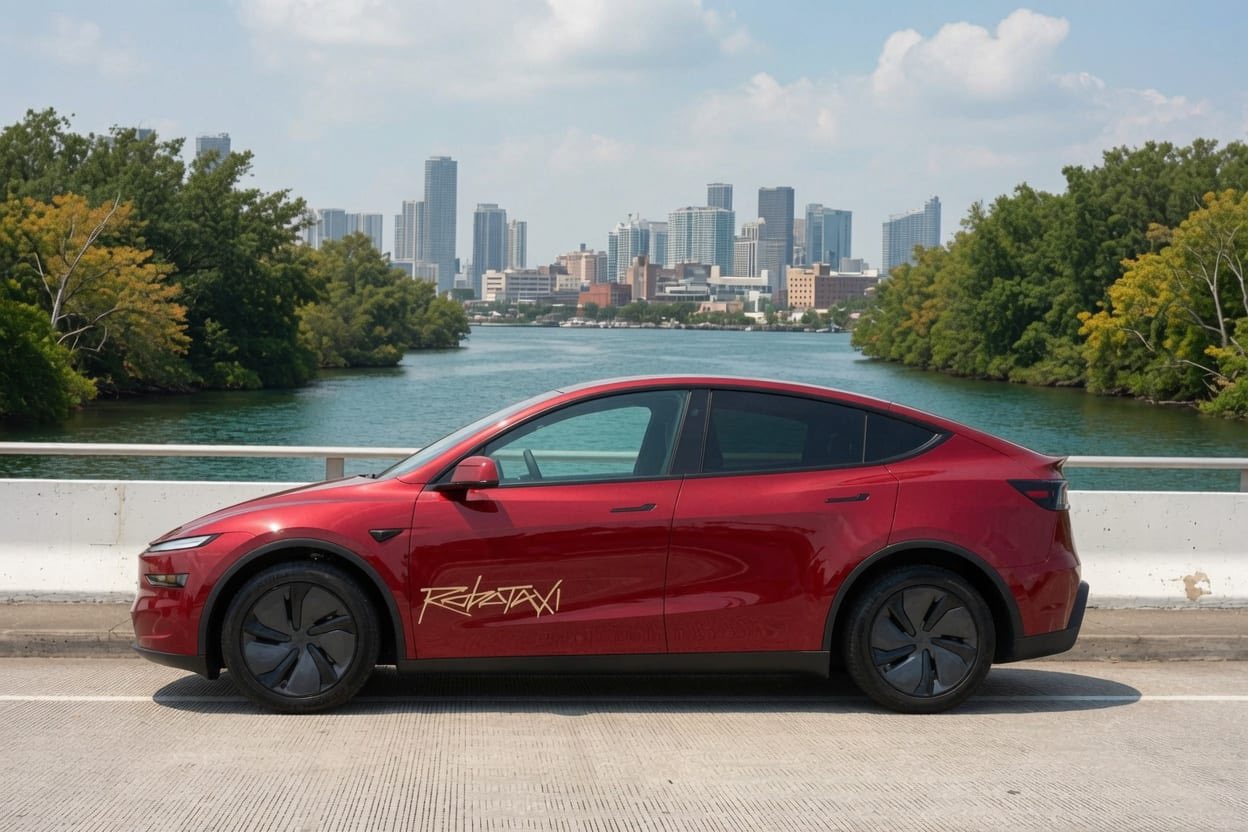
Tesla's camera-only autonomy strategy faces a direct regulatory test in New Jersey. Assembly bill A3968 would create an autonomous-vehicle pilot program with detailed safety, data, insurance, cybersecurity, and crash-avoidance requirements. The current debate centers on language that could require cameras plus two additional sensing technologies for fully driverless robotaxis, along with extensive supervised testing before deployment.
The debate matters because Tesla has built its autonomy program around vision-based AI rather than a lidar-centered sensor stack. If a state writes sensor diversity into law, Tesla Robotaxi availability could depend not only on software performance, but on hardware philosophy.
Why A3968 matters for Tesla Robotaxi
Tesla has not launched a New Jersey robotaxi service, but states often write rules before a fleet arrives. A3968 therefore matters now: lawmakers are trying to define safety requirements before driverless operators scale on public roads.
For Tesla, that creates a practical problem. A Tesla Robotaxi bill that requires lidar, radar, or other non-camera sensors would not simply ask Tesla to prove safety. It could force Tesla to change the vehicle hardware, at least for that state.
That is a much bigger barrier than permits, reporting, insurance, disengagement data, or remote-support rules. Hardware mandates can split the market. A company may have to redesign for one state, delay launch there, challenge the rule, or push for performance-based standards instead.
Camera-only vs. lidar and radar
Tesla has long argued that roads are built for human vision, so a strong enough camera-based AI system should be able to drive without lidar. Supporters see that approach as cleaner and easier to scale. Cameras are cheaper, lighter, and already installed on Tesla's production vehicles. A common hardware base also helps Tesla gather fleet data and send software improvements across many cars.
Regulators may see it differently. From a safety perspective, redundancy is easy to understand. If cameras are blocked by glare, heavy rain, dirt, or a hardware fault, another sensor type may still provide useful obstacle data. That is why many autonomous-vehicle developers combine cameras, radar, lidar, and maps.
The argument is not as simple as "more sensors good, fewer sensors bad." It is about whether regulators should judge performance or prescribe architecture. Tesla wants performance-based approval. Some lawmakers appear more comfortable requiring specific hardware.
Why regulators want sensor redundancy
It is easy for enthusiasts to call a sensor mandate outdated, but public officials have a different job than product engineers. A driverless robotaxi is not a private beta feature. It operates around pedestrians, cyclists, emergency vehicles, children, and drivers who never chose to join the test.
New Jersey also has dense traffic, difficult weather, older road layouts, and complicated urban driving. A cautious lawmaker can reasonably ask for high supervised mileage and redundant perception before removing the human driver.
The problem is that safety rules can age quickly if they are tied to today's hardware assumptions. A law that requires an autonomous vehicle to meet a measurable safety standard leaves room for better designs. A law that requires specific sensor categories can freeze one generation of technology into policy.
Could hardware mandates slow autonomous vehicles?
That is the central issue in New Jersey robotaxi regulation. If A3968 requires a multi-sensor stack, Tesla's camera-only system faces a direct hardware barrier. If lawmakers move toward performance-based proof, Tesla would still need convincing evidence that its approach works safely in New Jersey traffic and weather.
Neither side can dismiss the other. Tesla needs public trust, not only technical confidence. Regulators need safety rules that protect the public without blocking better designs before they can be tested.
The New Jersey debate could preview a larger national fight: should robotaxi laws define what autonomous vehicles must achieve, or what hardware they must carry? Tesla's answer is clear. The policy answer is still being written.
Sources
Nic Cruz Patane, New Jersey robotaxi bill discussion: https://x.com/niccruzpatane/status/2074988847591493639
New Jersey Legislature, A3968 bill search page: https://www.njleg.state.nj.us/bill-search/2026/A3968
The Verge, New Jersey bill could require lidar for robotaxis: https://www.theverge.com/transportation/962309/new-jersey-robotaxi-bill-lidar-tesla
Tesla, Autopilot and Full Self-Driving Capability support: https://www.tesla.com/support/autopilot
Share:
Tesla's Optimus Factory Buildout Looks Ahead of Schedule
Fi Launches the First Starlink Dog Collar