
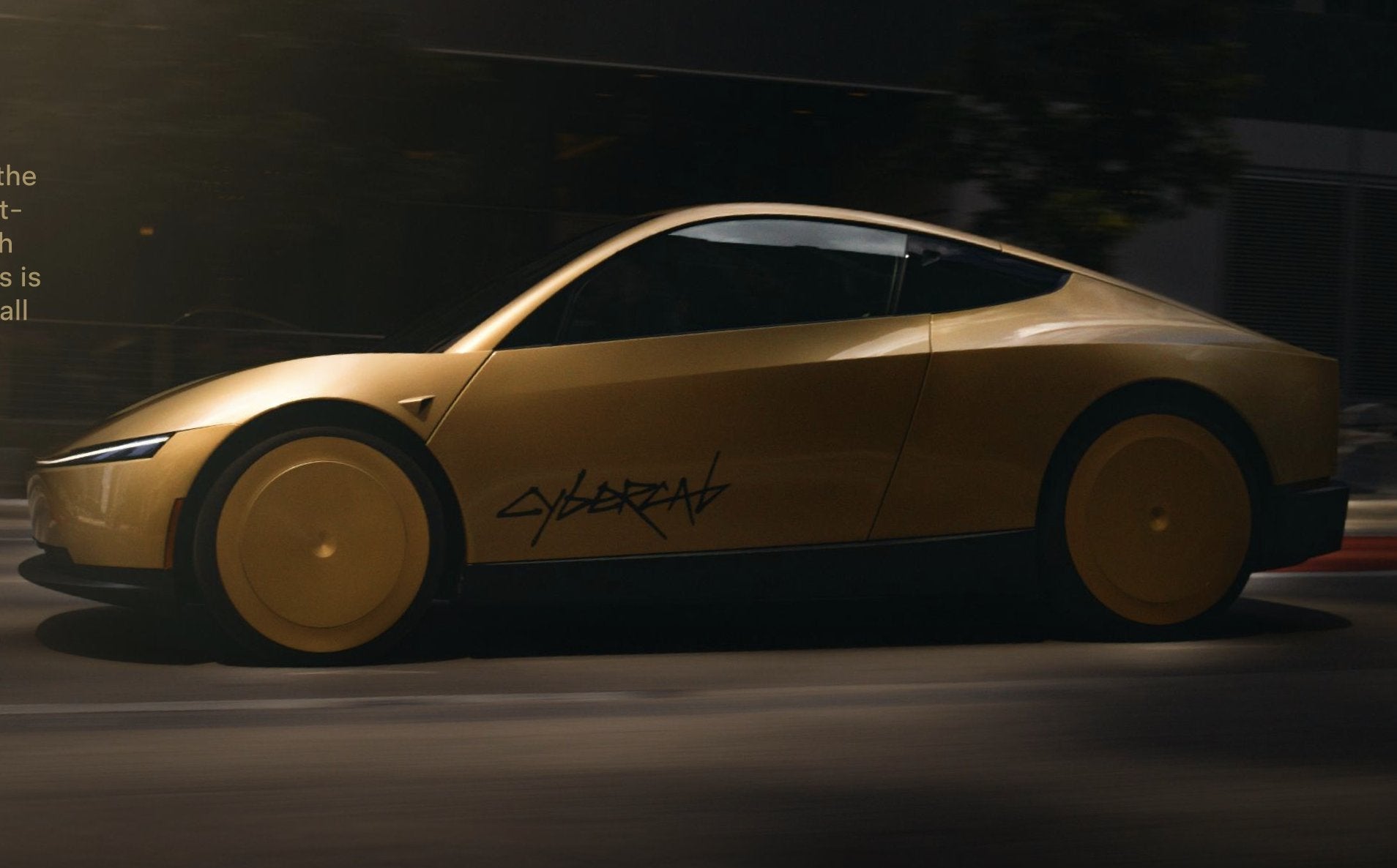
Tesla's 2025 Impact Report provides a new detail about Cybercab production: some components will use reaction injection molding, commonly known as RIM.
Tesla says adding color during molding cuts the cycle from hours in a conventional paint shop to minutes. For the affected parts, the company estimates a 35% reduction in supply-chain and manufacturing greenhouse-gas emissions and says the process avoids volatile organic compounds associated with paint.
How RIM works
Reaction injection molding forms a thermoset polymer by bringing together two low-viscosity reactive liquids, commonly a polyol and an isocyanate. The materials remain separate until a metering system sends them into a mixing head. They collide, mix and enter a closed mold at relatively low pressure.
The liquids cure into a solid part inside the tool. Manufacturers can mix color and other additives into the material. For Cybercab, Tesla plans to add the finish during molding so those components need little or no later painting.
RIM has long been used for bumpers, spoilers, equipment housings and other large polymer components. It was less attractive for traditional high-volume car bodies because steel stamping was fast, well understood and supported structural crash loads, while older RIM systems often served lower-volume applications with longer cure times and more finishing work.
Why the process may suit Cybercab
Cybercab is a compact two-seat Robotaxi built around high use and low production cost. Polymer exterior panels can form complex shapes, resist corrosion and leave the mold with a finished surface, avoiding some stamping, welding and painting steps.
Tesla appears to have designed the material, tooling and production sequence around Cybercab. The minutes-long cycle matters because slow curing has traditionally limited RIM in high-volume vehicle production.
RIM and Gigacasting do different jobs
Gigacasting injects molten aluminum under high pressure into a large die to create structural underbody sections. Those castings carry vehicle loads and replace assemblies that might otherwise require many stamped and welded metal parts.
RIM forms polymer parts from reactive liquids at much lower pressure. On Cybercab, it is intended for selected exterior components rather than the main metal structure. Tesla can use RIM and Gigacasting on the same car because the processes make different parts.
How RIM differs from steel stamping
Traditional car production presses sheet steel between large dies, trims the panels, joins them into a body and sends the assembled shell through pretreatment and paint. Stamping can produce parts in seconds at enormous scale, and steel provides predictable structural performance.
Its disadvantages include expensive presses and dies, multiple joining steps and a large paint shop that consumes energy, water and factory space. RIM's low mold pressure can reduce tooling demands, combine complex geometry into fewer pieces and integrate color into the part.
Possible effects on cost and repairs
Tesla may save money through shorter cycle times, fewer paint steps, lower energy use and fewer separate parts. A panel without a conventional painted topcoat may also be less vulnerable to paint chips and corrosion.
Repair costs are harder to predict. Color running through the material may make shallow scratches less visible, and a bolt-on panel could be replaced without straightening metal. But thermoset parts cannot usually be melted and reshaped, so a crack may require replacement. Cost will depend on part prices, attachment methods, availability and how well an older finish can be matched.
What the process means for a Robotaxi fleet
A Robotaxi operator cares about build speed, repair time and durable modular parts more than a long list of paint colors. Cybercabs are expected to cover high mileage, turning downtime and cosmetic repairs into regular operating expenses.
RIM has no bearing on whether Cybercab can drive itself. It may, however, affect how cheaply Tesla can build and repair the fleet. That makes it relevant to the economics of the Robotaxi program.
Share:
Giga Texas Flyover Shows Nine Cybercabs Preparing for Austin Testing
A 73-MPH Tesla Crash, but Who Was in Control?