
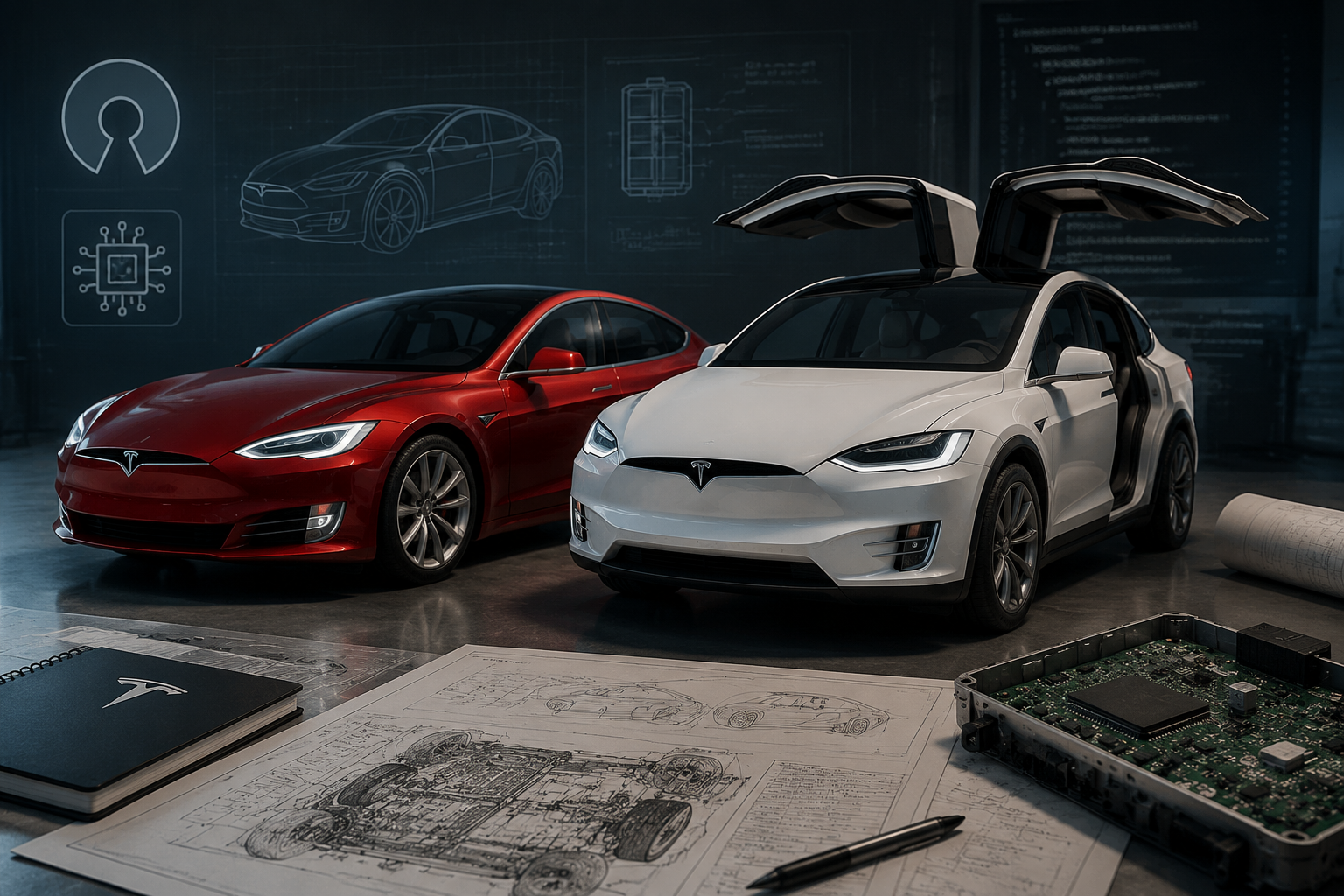
Tesla plans to make Model S and Model X design and software materials open source, according to a July 24 statement from Elon Musk. The announcement arrived as attention turns toward the legacy of Tesla’s two longest-running premium vehicles and what owners, repair specialists and engineers may be able to learn from them.
“Just as Tesla made the original Roadster design and software open source, we plan to do the same with Model S and X.”
The sentence is significant, but its tense matters. Musk said Tesla plans to make the materials available. He did not point to a new repository, identify a license, list the documents or give a release date. The news is therefore a commitment of intent—not evidence that Model S and Model X files are already available for download.
Why it matters
Model S, launched in 2012, proved that a long-range electric sedan could compete as a desirable technology product rather than a compliance car. Model X followed with an unusually complex SUV architecture. Both accumulated years of revisions across battery packs, drive units, infotainment systems, wiring, body hardware and diagnostic procedures. Even a partial technical archive could be valuable to researchers and independent specialists.
The practical benefit depends on scope. Service diagrams could help technicians understand assemblies. Diagnostic software could make fault tracing easier. Interface definitions might support preservation projects. Design files could help educators explain early Tesla engineering. Source code, if included with usable build instructions and legal terms, would offer a different level of access. Those categories should not be treated as interchangeable.
![]() The Roadster precedent is narrower than it sounds
The Roadster precedent is narrower than it sounds
Tesla’s public Roadster repository is real, but it is not a complete digital twin of the car. The official GitHub page describes the collection as development and diagnostic software files for 2008–2012 Roadsters. It includes diagnostic software and DBC files, while the repository’s readme sends users to separate terms for disclosed research and development documents. That example suggests the Model S and Model X release could be useful without covering every design or every line of vehicle software.
Tesla also publishes source drops for components built on open-source software, including Linux, Buildroot and coreboot materials. Those releases largely address existing license obligations and are different from voluntarily publishing Tesla-created vehicle designs. The company’s 2014 patent pledge is different again: it promises not to initiate certain patent lawsuits against parties acting in good faith, but Tesla explicitly says the pledge is not a patent license and does not authorize knockoff products.
That legal distinction is not pedantic. Calling files “open source” does not answer whether people may modify, redistribute or use them commercially. A clear license, version history and safety disclaimer will determine whether the release supports a genuine community or simply creates a historical archive.
Documentation quality will matter just as much as file volume. Old code without toolchains, hardware revisions or wiring context can be educational yet difficult to use. A smaller, organized release with version labels may serve owners better than a large dump of unexplained material.
What comes next
The next meaningful signal will be a Tesla-hosted page or verified repository containing a file inventory and terms of use. Owners will want service and diagnostics material; developers will look for source code and interfaces; historians will care about design evolution. Until Tesla publishes those details, the strongest conclusion is restrained: Musk has made a promising commitment, and the value of it will be measured by what the company actually releases.
Related EVBASE reading
Sources
Elon Musk—Model S and Model X open-source plan
Teslarati—report on the Model S and Model X announcement
Share:
SpaceX Starship Flight 13 Turns Splashdown Into Reuse Data
Starlink Mobile Expands From Texting to Apps With Telstra