
The Launch Looked Ordinary Because the System Works
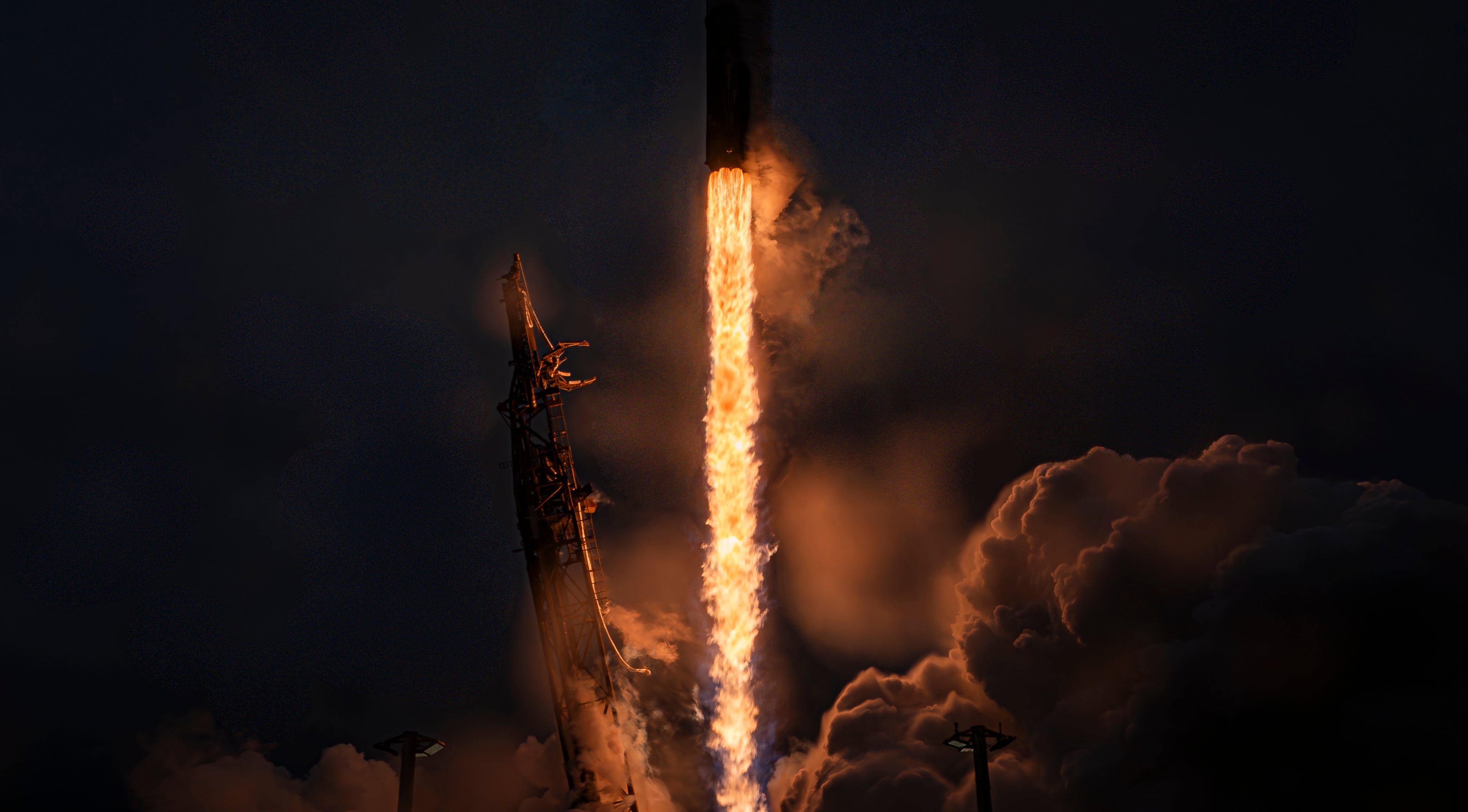
SpaceX launched 24 Starlink satellites from California aboard a Falcon 9. The announcement was brief, reflecting how routine these missions have become.
That routine quality is the important part.
Satellite broadband requires more than designing a good spacecraft. A large low-Earth-orbit constellation must be deployed, replenished, upgraded, and expanded continuously. Satellites operate closer to Earth than traditional communications satellites, which can reduce latency but also means each satellite covers a smaller area and remains in orbit for a more limited period.
The network therefore depends on a launch machine.
SpaceX has built that machine around Falcon 9 reusability, frequent missions, standardized Starlink payloads, and operational experience at launch sites in California and Florida. Each individual launch may look incremental. Together, they form the supply chain that keeps Starlink growing.
Cadence Is a Competitive Advantage
Most technology companies rely on outside logistics providers. Starlink’s most difficult logistics step is orbital launch, and its parent company controls it.
That creates a powerful advantage. SpaceX can schedule Starlink missions around customer launches, booster availability, satellite readiness, and regulatory needs. It can use gaps in the manifest to deploy its own network. It can also learn from repeated missions and improve payload integration, launch preparation, and recovery operations.
Competitors that purchase launch services face different economics. They must negotiate capacity, accept available schedules, and pay an external provider. Delays in launch availability can delay network coverage and revenue.
For Starlink, launch cadence is not merely an aerospace achievement. It is part of product development.
More satellites can add capacity in congested regions, expand coverage, replace older spacecraft, and support new services. The network can evolve physically as well as through software.
Owning the Rocket Changes Network Economics
Vertical integration does not make launches free. Rockets, satellites, ground systems, recovery operations, and launch facilities remain expensive. But internal control can change decision-making.
SpaceX can evaluate the combined economics of launch and connectivity. A launch that might look marginal as a standalone service can make sense if the satellites create years of subscription revenue. This is similar to a retailer investing in warehouses or a cloud company building data centers: the infrastructure is expensive, but it supports the recurring business.
That relationship also helps SpaceX iterate. Starlink satellites have changed over time, adding capacity and new functions. A company with frequent access to orbit can deploy improvements faster than one that must wait years between constellation updates.
The rocket and the network reinforce each other. Starlink provides recurring revenue and demand for launches. Falcon 9 gives Starlink a deployment path. High mission volume spreads operational learning across both businesses.
Constellation Scale Creates Its Own Burden
Scale is not only an advantage. A large constellation creates significant responsibilities.
SpaceX must manage orbital debris risk, collision avoidance, satellite deorbiting, astronomical concerns, spectrum coordination, and national regulations. More satellites also mean more replacements and more launches. The network must remain financially productive enough to justify that cycle.
Reliability matters at every layer. A launch failure can destroy a batch of satellites. A satellite design problem can affect many units. A ground-network disruption can reach customers across large areas.
The same integration that gives SpaceX speed also concentrates risk inside one organization.
Starlink’s growth must therefore be judged not only by satellite count. The important measures include network capacity, service quality, customer economics, hardware cost, regulatory access, and responsible orbital operations.
The Quiet Missions Build the Moat
Spectacular launches attract attention, but routine missions create durable capability.
The launch of 24 satellites may not change Starlink overnight. It adds another layer to an infrastructure system built through repetition. Every successful mission trains teams, proves hardware, replenishes the constellation, and reduces the unusualness of operating at high cadence.
That is difficult for competitors to reproduce because the advantage is cumulative. It is not one rocket design or one satellite. It is factories, launch pads, reusable boosters, ground stations, software, regulatory relationships, and years of operating experience working together.
Starlink’s moat may ultimately be less about any individual satellite than about the speed at which SpaceX can place, replace, and improve thousands of them.
The brief launch announcement captured that reality. Falcon 9 sent another batch into orbit, and the system moved on to the next mission.
When extraordinary operations become routine, infrastructure starts to look inevitable.
Share:
Why Electric Cars Dominate at 14,000 Feet
FSD’s Real Breakthrough Is Staying Useful for 500 Miles