
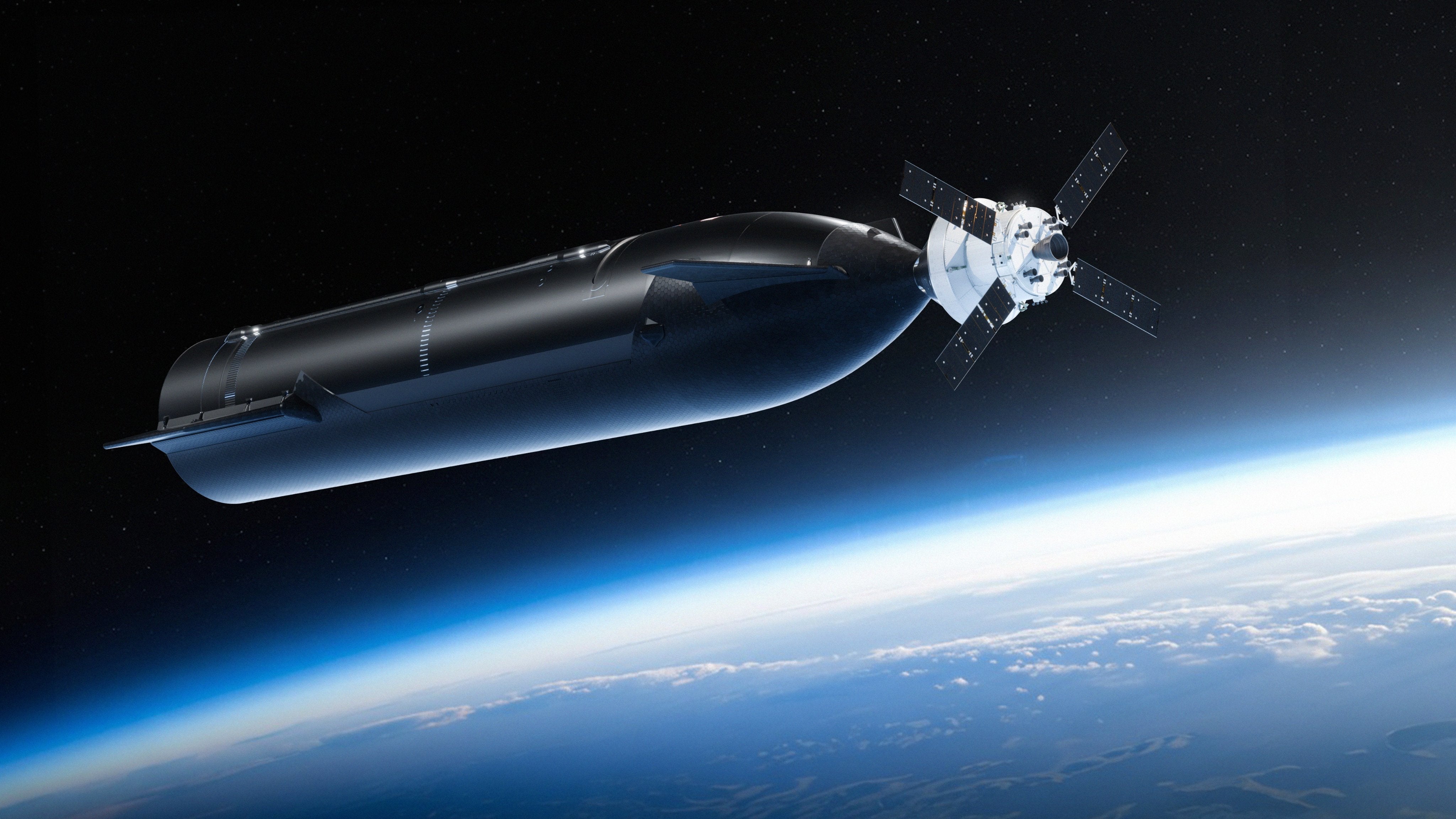
Starlink says each of its V3 satellites will carry six high-capacity 400-gigabit space lasers, allowing high-bandwidth traffic to move between distant points through redundant routes across what the company describes as a petabit laser mesh network. The company disclosed the specification on July 16, 2026, linking the announcement to its official V3 satellite update.
What Starlink actually announced
The important part of the update is not a new consumer plan or a guaranteed speed for a Starlink Mini. It is a network-architecture claim. Inter-satellite laser links allow satellites to pass traffic to one another in orbit, while redundant paths give the network more than one potential route between locations. Starlink’s statement describes six separate 400Gbps links on every V3 satellite and a mesh designed to carry traffic between any two points in the world.
That makes V3 a capacity and routing story. More capable satellites can give the network additional tools for moving data across long distances, especially when the most direct terrestrial route is unavailable or impractical. However, Starlink did not say in the post that every existing customer will immediately receive a specific download speed, latency reduction or coverage improvement. Real-world service will still depend on deployed satellite capacity, ground infrastructure, local demand, the user terminal and the service plan.
Why the V3 laser mesh matters to mobile users
Portable satellite internet has made remote work, camping and long-distance travel more connected, particularly in parts of North America where cellular coverage becomes inconsistent beyond major highways. Starlink describes its Mini as a compact, portable kit intended for internet access on the go. A stronger orbital backbone could eventually support that broader mobility use case, but the V3 announcement should be understood as infrastructure for the network’s future rather than an instant upgrade inside a parked Tesla or Cybertruck.
For EV travelers, that distinction matters. A satellite link can support communication, navigation research or remote work at a legal campsite, but it does not replace route planning, charging checks, weather awareness or emergency preparation. Starlink service availability and lawful use also vary by location and plan. Drivers should consult Starlink’s current terms and never operate or position equipment in a way that blocks visibility or creates an unsecured object while the vehicle is moving.
The practical EV camping gap remains physical
Better connectivity can make a remote stop more useful, but it does not create a sleeping surface, shade or organized storage. That is where vehicle-specific accessories have a natural supporting role. They do not improve Starlink reception and should not be presented as Starlink hardware; they simply address the physical side of a connected Tesla or Cybertruck trip.
Model Y/Model Y Juniper Air Mattress with External Air Pump is listed for Model Y 2020–February 2025 and Model Y Juniper from March 2025. It packs down for storage and uses a detachable external pump, making it the strongest match for owners who turn the rear cabin into an overnight rest space.
Model Y Tailgate Camping Tent and Awning adds a covered area behind the vehicle for meals, device setup or a break from sun and light rain. EVBASE lists fitment for the original Model Y and Juniper, but buyers should confirm the exact variant shown on the live page before ordering.
Cybertruck Underseat Storage Box with Dividers is listed for the 2024+ Cybertruck and creates divided space for small camping equipment, batteries and water bottles. It is the most practical of the three for keeping power cables and travel essentials from moving around the cabin.
|
Use code ev9999 to get 20% off any product at EVBASE. |
What happens next
The V3 announcement raises expectations for Starlink’s next stage, but deployment—not a specification sheet—will determine when customers see a measurable difference. The useful near-term signal is that Starlink is building more routing capacity and redundancy into each new satellite. For EV travelers, the best response is equally grounded: follow confirmed network updates, choose the correct service plan, prepare the vehicle for the route and treat connectivity as one part of a complete travel setup.
Related EVBase links
· Browse Tesla camping accessories
· Browse Cybertruck camping accessories
· EVBase guide to a Model Y tailgate camping tent
· EVBase Tesla and EV news hub
Sources
· Starlink official X announcement, July 16, 2026
Share:
Tesla Safety Awards Span Three Major Test Programs
Tesla Launches a $225 Balance Bike for Kids in the U.S.