
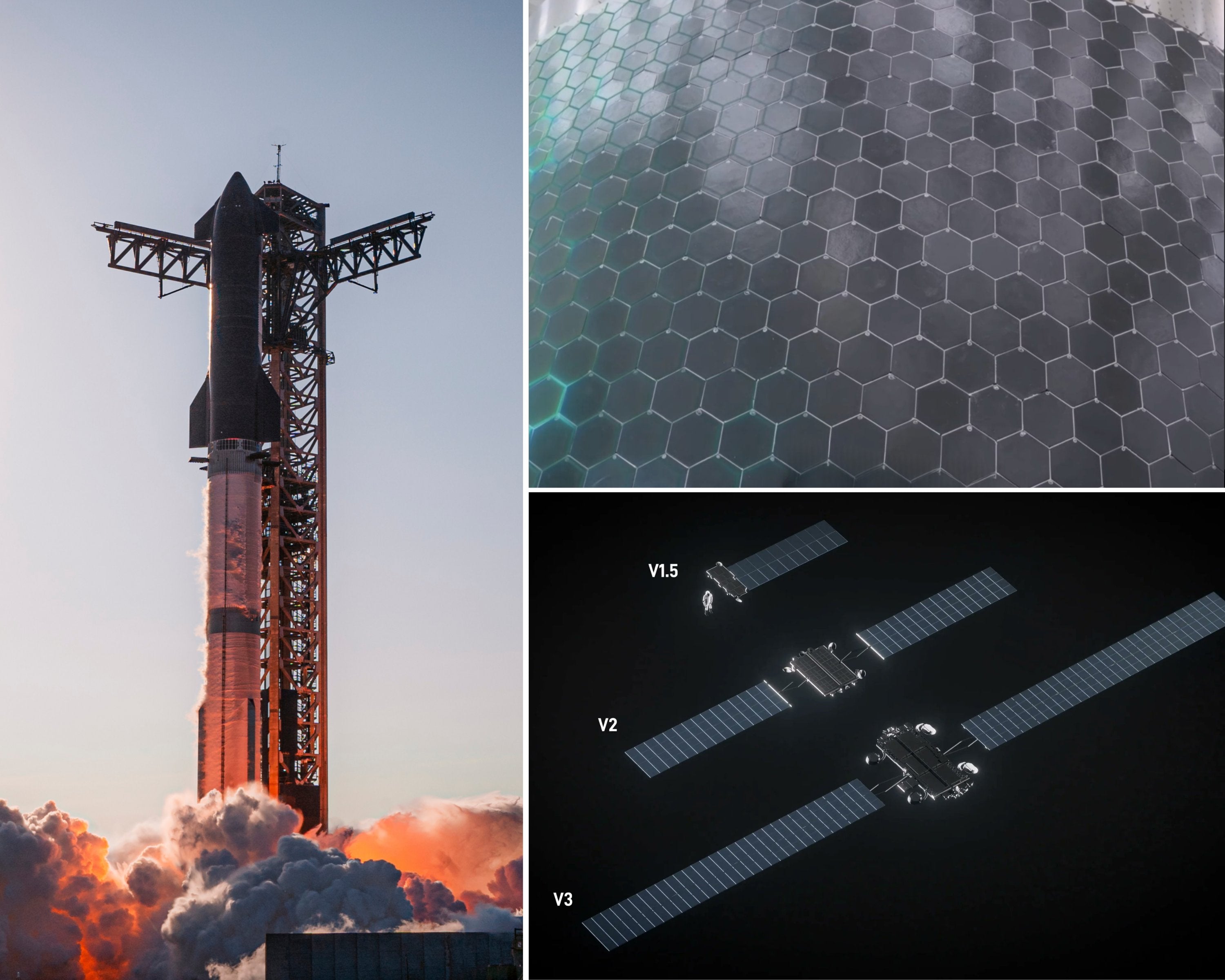
SpaceX's 13th Starship test flight is shaping up as more than another launch-and-reentry demonstration. According to details highlighted by Sawyer Merritt, SpaceX plans to deploy Starlink V3 satellites for the first time during the upcoming flight, with 20 satellites planned for deployment.
The mission is targeted for Thursday, July 16 at 6:30 p.m. ET, according to the cited SpaceX announcement. The test will again focus on launch, ascent, stage separation, boostback, landing-burn objectives, and upper-stage performance. The Starlink V3 payload gives the flight another job.
Why Starlink V3 matters
Starlink V3 matters because SpaceX says the next-generation satellites are meant to expand network capacity and user speeds. On this flight, the satellites are expected to deploy solar arrays and antennas and try to connect with ground stations in South Africa and the wider Starlink constellation through high-capacity laser links.
That makes Flight 13 a test of both Starship and Starlink. If Starship is going to become the high-volume deployment system for larger next-generation satellites, SpaceX has to prove the rocket can carry, release, and support the early operation of Starlink V3 hardware.
Heat-shield cameras turn satellites into inspectors
The most unusual detail is that six of the Starlink V3 satellites have been modified with cameras to scan Starship's heat shield and send imagery back to operators. SpaceX is also adding white-painted heat-shield tiles to simulate missing tiles and serve as imaging targets.
It is a practical test design. Instead of treating the satellites only as payload, SpaceX is using them as inspection tools. Heat-shield readiness is central to Starship's long-term goal of returning to the launch site. If camera-equipped satellites can help inspect tile condition after reentry, SpaceX gains another way to judge whether the vehicle is ready for reuse work.
The booster and ship upgrades
Merritt's summary also listed changes tied to lessons from previous flights. These include a more robust stage-separation flip sequence, hardware upgrades for Super Heavy Raptor relight reliability during boostback, updated engine alarms and abort logic, and propulsion changes meant to address the prior Flight 12 engine-out issue.
The ship side will also test new heat-shield tile designs and attachment mechanisms, including work around the aft flaps and aft skirt. Load-sensing tiles are expected to measure stresses during flight, while a higher dynamic-pressure ascent profile will stress-test the heat shield and help SpaceX study payload capability.
What success would mean
Success on Flight 13 would not only mean reaching space. It would show progress on several pieces SpaceX needs for Starship's operational future: reliable booster behavior, improved upper-stage durability, payload deployment, Starlink V3 connectivity, heat-shield inspection, and an in-space Raptor relight test.
The goal is straightforward. Starship is not only a rocket program. It is meant to be the launch backbone for SpaceX's next satellite network, lunar plans, and reusable launch architecture. Flight 13 could test several of those pieces in one mission.
Sources
Sawyer Merritt, Starship Flight 13 and Starlink V3 payload summary: https://x.com/SawyerMerritt/status/2076079355890212972
Sawyer Merritt, Starship Flight 13 target date post: https://x.com/SawyerMerritt/status/2076076086908027387
SpaceX, Starship official page: https://www.spacex.com/vehicles/starship/
Space.com, SpaceX ignites Super Heavy ahead of Flight 13: https://www.space.com/space-exploration/launches-spacecraft/spacex-ignites-all-33-powerful-engines-on-starship-booster-test-ahead-of-flight-13-test-launch
Share:
Rivian R2 Looks Ready for Families, but Tesla Still Owns the Self-Driving Conversation
Tesla FSD V14.3.5 Starts Rolling Out With Camera Preview Available Outside Park