
How much power does an AI satellite need?
The most interesting number in SpaceX's new AI satellite discussion is not the satellite count. It is 150 kW.
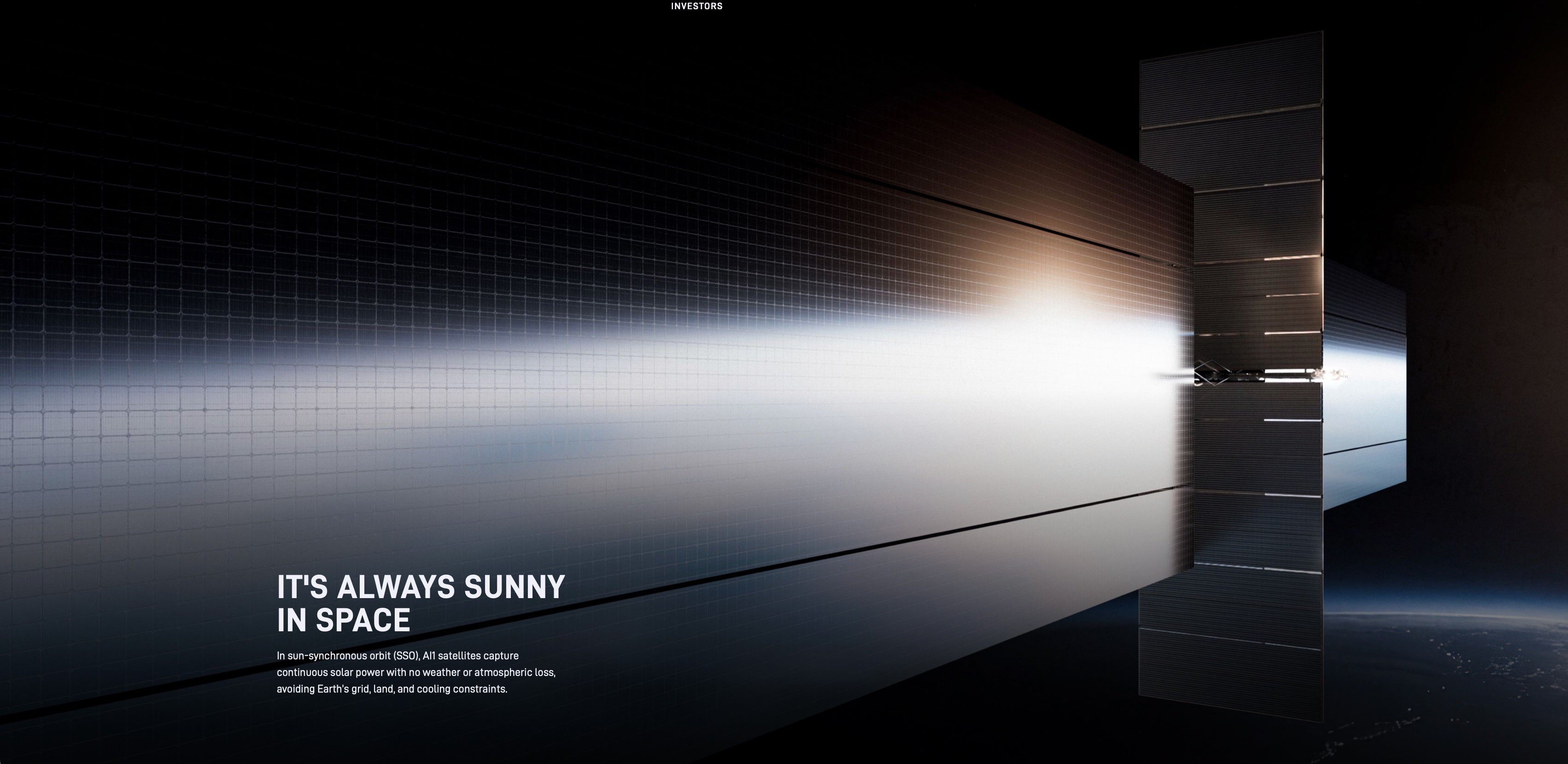
Sawyer Merritt's post describing SpaceX's AI1 renderings says the satellite is designed around a 150 kW peak compute payload, a 120 kW average compute payload, roughly 70 kW per ton, and a 150 kW solar array. Those numbers make it sound less like a normal communications satellite and more like a compact data center in orbit.
That is the idea behind Starmind. AI processing does not always have to happen inside a warehouse on Earth. If power comes from solar arrays, data moves through laser links, and heat can be pushed out through radiators, orbit becomes another place to run inference and process data.
Universal Compute Module: vendor-agnostic AI in space
The second important phrase is Universal Compute Module. Merritt's post says AI1 is chip-vendor agnostic, which means the architecture could support compute modules from different providers. That matters because AI hardware changes quickly. A satellite locked to one processor generation could look dated before the constellation is built out.
A vendor-agnostic setup would let SpaceX support NVIDIA, AMD, or future AI accelerators without redesigning the whole satellite around one supplier. It also gives SpaceX leverage. If Starmind becomes real infrastructure, compute flexibility may matter as much as launch cadence.
In other words, SpaceX is not only talking about a satellite. It is talking about a platform.
How SpaceX cools AI computers in space
AI chips turn electricity into heat. On Earth, data centers use fans, liquid loops, chillers, and a lot of facility engineering to keep servers running. In space, there is no air for ordinary convection. Heat eventually has to radiate away.
That is why liquid cooling and radiator area matter so much to the AI1 concept. The post cites a 110-square-meter deployable liquid radiator, redundant pumping loops, and integrated micrometeoroid shielding. Those details make the concept more serious than a simple "put GPUs in space" pitch.
The thermal problem is central. If SpaceX cannot cool the compute payload, available AI performance falls. If it can cool the payload reliably, the satellite becomes a repeatable unit for orbital compute.
Laser links turn compute into a network
Compute by itself is not enough. AI results have to move. SpaceX already has Starlink laser-link experience, and the AI1 concept builds on that. High-speed optical links could connect satellites to one another and send processed results back to Earth through the Starlink network.
That could let data processing happen closer to where data is collected, especially for space-based imaging, sensing, defense, weather, or remote monitoring. Instead of sending all raw data to Earth, satellites could process more onboard and transmit smaller, more useful outputs.
Why the Gigasat Factory matters
XFreeze described SpaceX's planned Bastrop Gigasat Factory as the manufacturing base for Starmind, with work spanning AI satellite production, development, user terminals, gateways, PCB or silicon work, and solar cells.
That is the bigger point. SpaceX is not just showing a new satellite render. It appears to be planning a vertically integrated AI infrastructure chain: rockets to launch it, factories to build it, solar arrays to power it, liquid cooling to keep it alive, laser links to move data, and modular compute to keep the silicon current.
Starlink turned satellites into mass-produced internet infrastructure. Starmind asks whether the next version can also be mass-produced AI infrastructure.
Share:
Is the Porsche Macan Turbo Worth Nearly Twice a Tesla Model Y?
LG Expands Tesla Battery Production as Cell Demand Stays High