
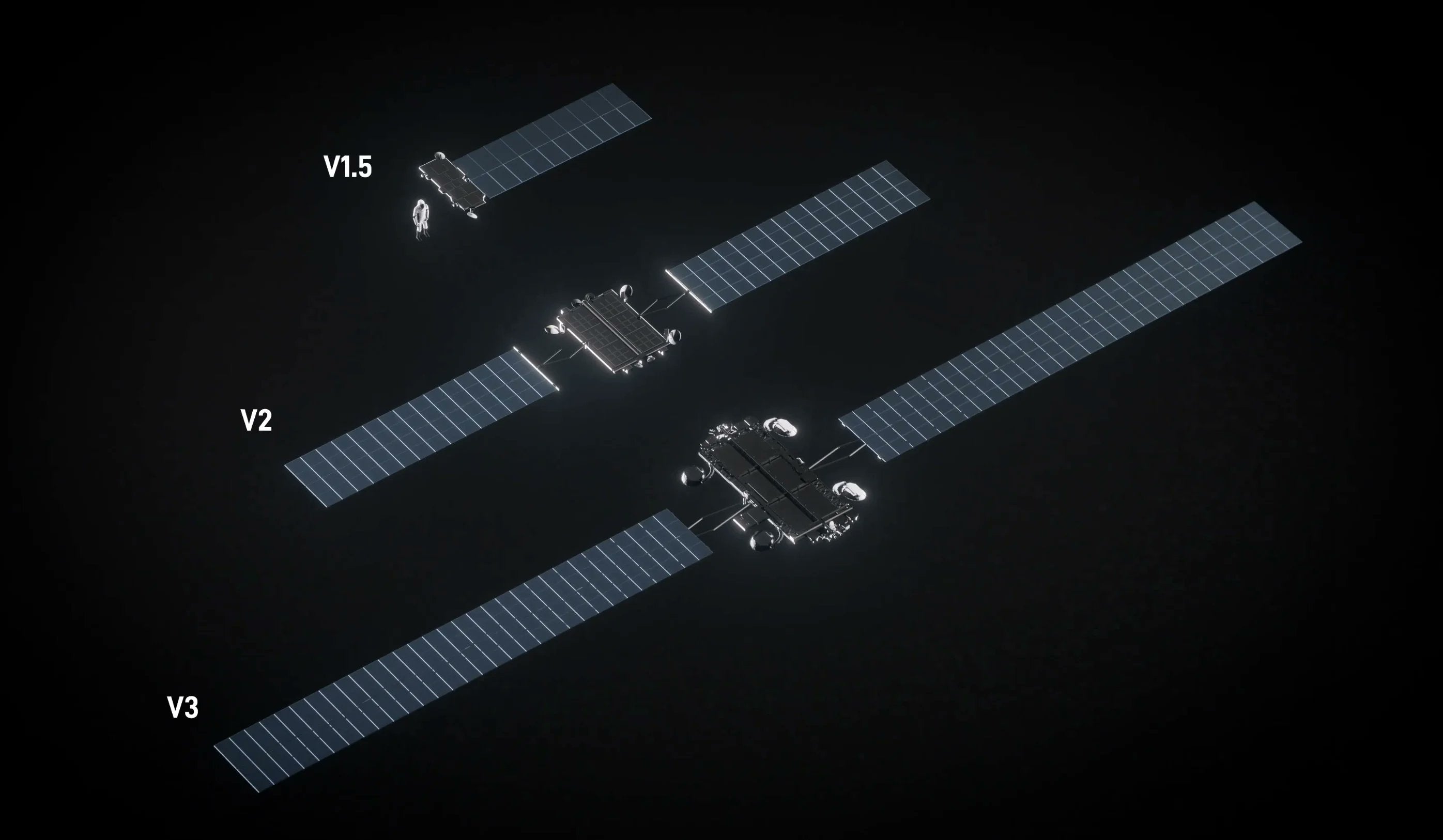
SpaceX has filed an FCC application for a Gen3 non-geostationary satellite system containing up to 100,000 spacecraft.
The filing, SAT-LOA-20260630-00264, is a request rather than an approval. The FCC must review spectrum use, orbital safety, technical details and the public interest before deciding what SpaceX may deploy.
Two altitude ranges in very low Earth orbit
The filing describes two groups of closely spaced orbital shells. One band would operate at nominal altitudes from 323 to 327.5 kilometers, while the second would operate from 473 to 477.5 kilometers.
SpaceX seeks flexibility to use inclinations ranging from 26 degrees to 96.9 degrees, including sun-synchronous coverage. Different inclinations allow a constellation to distribute service across varying latitudes and respond to geographic demand.
Lower orbits can reduce signal travel time, but they also create more atmospheric drag. Satellites must use propulsion to maintain altitude, while failed spacecraft tend to reenter sooner. At this scale, regulators will examine collision management, launch rates, spectrum coordination and the atmospheric effects of reentries.
SpaceX proposes multi-gigabit upload and download speeds
SpaceX says Gen3 would provide low latency and multi-gigabit symmetrical service for consumers, businesses, governments and large numbers of connected devices.
Symmetrical service provides high upload capacity as well as download speed. That matters for industrial sensors and high-definition devices that send large amounts of data to cloud systems.
SpaceX says the network will require new spectrum and sharing rules. Interference will be a major part of the FCC review because Starlink must coexist with other satellite and terrestrial services.
The filing is separate from SpaceX's orbital AI proposal
This Gen3 request is distinct from an earlier SpaceX filing involving as many as one million satellites for orbital computing. The numbers should not be combined or described as an approved constellation.
Gen3 is primarily a communications network, even though SpaceX expects more traffic from AI devices. The separate orbital-computing proposal would place processing hardware in space rather than mainly connecting users to data centers on Earth.
FCC approval would be only an early step
Even full approval would not put 100,000 satellites in orbit immediately. SpaceX would still need to build them, arrange launches, add gateways and user equipment, and meet regulatory deadlines.
The proposal is much larger than today's Starlink fleet. Deploying large Gen3 satellites at that scale would likely depend on Starship-class launch capacity. Delays in spacecraft or rocket production could change the plan substantially.
The FCC may approve only part of the request, set deadlines or require design changes. It has previously authorized portions of SpaceX applications while postponing decisions on additional satellites.
The filing shows how SpaceX wants Starlink to grow: from a broadband network into high-capacity infrastructure for people, companies, governments and connected machines. The final size will depend on the FCC and on whether SpaceX can manufacture and launch the system.
Share:
Tesla Plans to Reuse Giga Texas Data-Center Heat in Vehicle Paint Operations
Tesla Plans to Reuse Giga Texas Data-Center Heat in Vehicle Paint Operations