
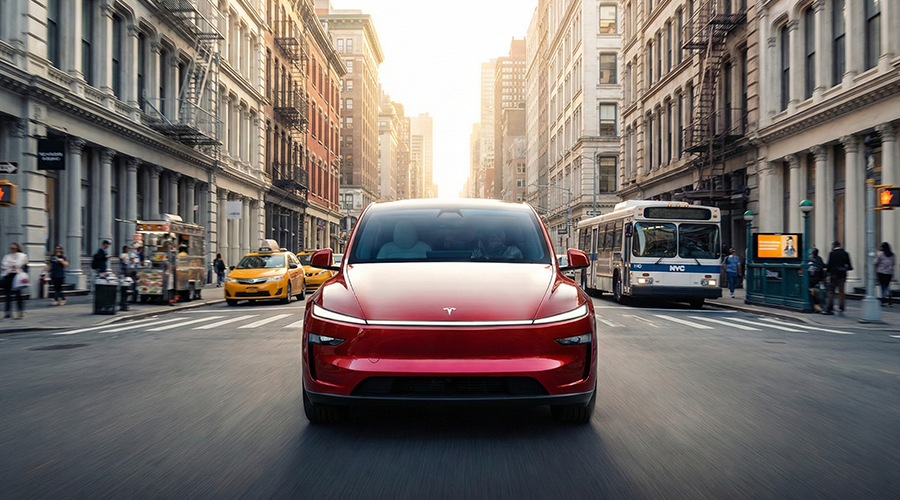
Tesla’s Robotaxi program is making headlines again after CEO Elon Musk and Tesla AI Director Ashok Elluswamy shared first-hand impressions of autonomous Robotaxi journeys that featured no safety monitor or occupant in the driver's seat. This development underscores the rapid progress toward fully unsupervised operations.
Empty-Seat Robotaxi Tests Spark Interest
Over the Christmas Eve weekend, both Musk and Elluswamy posted about their experiences riding in Tesla Robotaxis without anyone in the driver’s seat. Musk described one such outing around Austin as “perfect driving,” where a Robotaxi navigated city streets with no safety monitor behind the wheel while he rode in the passenger seat. Elluswamy shared a video from the rear seat of a similar ride, calling it “an amazing experience”, footage that highlighted both front seats empty and the vehicle smoothly managing real-world traffic conditions.
These posts follow numerous sightings on social media of Tesla Robotaxis operating autonomously on public roads in Austin, Texas. A key testing ground for the company’s ride-hailing efforts. Musk himself acknowledged one such unmanned test, noting that “testing is underway with no occupants in the car.”
“A Tesla with no safety monitor in the car, and me sitting in the passenger seat, took me all around Austin on Sunday with perfect driving,” Musk wrote.
“It’s an amazing experience!” Elluswamy captioned his video.
A Tesla with no safety monitor in the car and me sitting in the passenger seat took me all around Austin on Sunday with perfect driving
— Elon Musk (@elonmusk) December 24, 2025
Toward Unsupervised Robotaxis
Earlier this month at an xAI Hackathon, Musk reiterated Tesla’s aggressive timeline, noting that Robotaxis could soon operate in Austin with no one in them, not even in the passenger seat, within about three weeks, suggesting that unsupervised driving is “pretty much solved at this point.” He also echoed similar remarks during Tesla’s 2025 Annual Shareholder Meeting and its Q3 earnings call.
These insights lend credence to Tesla’s goal of advancing its autonomous ride-hailing service beyond supervised test fleets, which initially included an employee safety monitor in the passenger seat and later moved that monitor to the driver’s seat. The latest empty-seat tests represent a key step toward launching the first truly driverless Robotaxi service.
Why This Matters
Tesla’s Robotaxi initiative, powered by its in-house Full Self-Driving (FSD) AI and continually trained on real-world data, aims to redefine urban transportation by creating a fleet of fully autonomous, on-demand vehicles. Successfully operating Robotaxis without a human monitor would mark a major milestone in autonomy and mobility services worldwide.
As Tesla pushes toward this goal in Austin and beyond, the company continues to draw strong interest from both enthusiasts and critics alike, with every milestone offering a glimpse into a future where cars drive themselves without anyone behind the wheel.
Share:
Tesla's FSD Fleet Approaches 7 Billion Miles Driven, Over 2.5 Billion in Urban Streets
How to Keep Your Tesla Model Y Trunk Organized and Private