
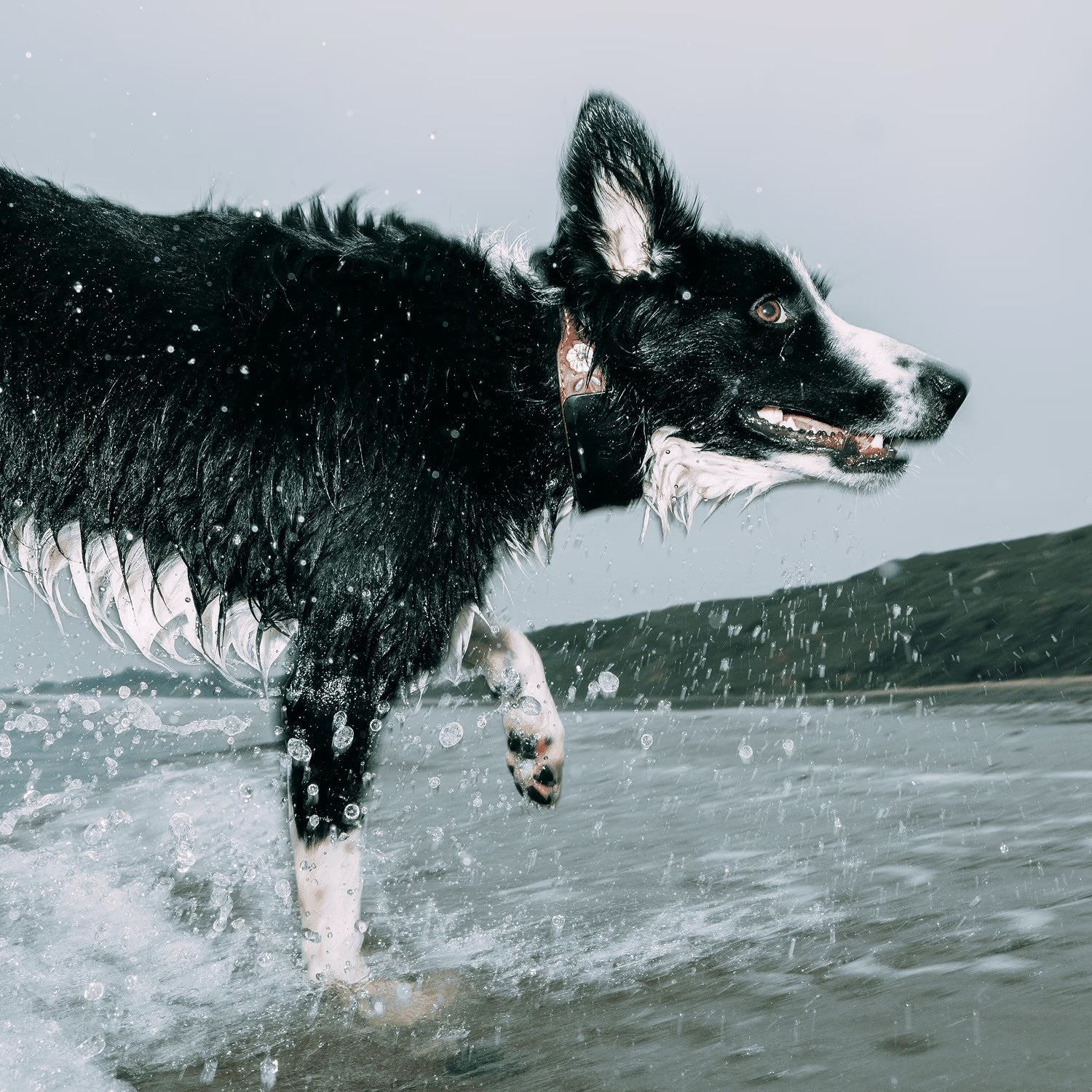
A dog GPS collar for dead zones
Fi has launched what it calls the first dog collar with Starlink-connected tracking, according to a July 8 post from Sawyer Merritt. The pitch is simple: if a dog runs beyond normal cellular coverage, the collar can keep reporting location through satellite-backed connectivity instead of going silent.
For dog owners, that is the nightmare. Dogs slip collars on hikes, bolt from campgrounds, chase wildlife, get out of rural yards, or become separated during travel. Traditional trackers help when cellular service is available. The harder question is what happens when the dog is in the same place where phones struggle too.
That is the opening Fi is trying to take with the Starlink Dog Collar.
What the Fi Starlink Dog Collar promises
Merritt's post lists several main features: up to five days of battery life, T-Satellite with Starlink GPS support, dual-band high-accuracy GPS, automatic switching between LTE and satellite-backed connectivity, real-time location updates, a sound and vibration Fi Callback training feature, and waterproof construction tested for salt water with IP68 and IP66K ratings.
The pricing in the post is $199 plus a $189 annual membership for new customers. Existing members can pay a $299 flat fee. Fi has usually sold GPS collars as connected pet-safety devices rather than ordinary accessories, and this version moves the category closer to outdoor safety gear.
The important phrase is automatic switching. A pet owner should not have to choose a network mode during a search. If the collar can move between LTE, Wi-Fi, Bluetooth, GPS, and satellite-backed service on its own, it becomes more like a background safety layer.
Why satellite backup changes the product
Starlink's wider promise has been coverage in places where ground networks are weak or missing. For phones, that can mean emergency messaging or rural connectivity. For a dog GPS collar, the use case is narrower but very practical: more location confidence when the animal leaves the cellular map.
Satellite tracking is not magic. Battery life, sky visibility, terrain, tree cover, collar fit, and network conditions can all affect performance. Even partial connectivity in a dead zone, though, can be far more useful than a last-known cellular location from miles away.
The Fi Dog Collar also fits a larger shift in connected devices. Satellite connectivity is moving from specialized equipment into everyday products, including phones, cars, farm equipment, shipping trackers, and now pet collars.
The price is really about peace of mind
Tesla and Starlink fans may focus on the technology, but regular buyers will start with cost. A $199 device plus a $189 annual membership is not cheap. For existing Fi members, the $299 flat-fee option may make more sense depending on what they already pay and how they use the collar.
For apartment dogs that rarely leave strong cellular coverage, the value may be limited. For hikers, rural families, hunters, campers, ranch owners, and people with dogs that like to escape, the math changes. The product is not selling novelty. It is selling one better chance during a pet owner's worst hour.
That is why "Dog GPS Collar" is more than an SEO phrase here. It matches the buyer intent. People searching for this kind of product are often already worried about losing a dog.
What pet owners should watch next
The launch leaves several practical questions. How reliable is satellite-backed tracking under trees and in bad weather? How often does the collar need higher-power modes? How smooth is the handoff between LTE and T-Satellite with Starlink? How fast do real-time updates arrive when a dog is moving?
If Fi gets those details right, the Starlink Dog Collar could become a clear consumer example of satellite connectivity solving a real household problem. Not every connected product needs a grand story. Sometimes the best use of space technology is knowing which direction to run when the gate is open and the dog is gone.
Share:
Why Tesla's Camera-Only System Has a New Problem in New Jersey