
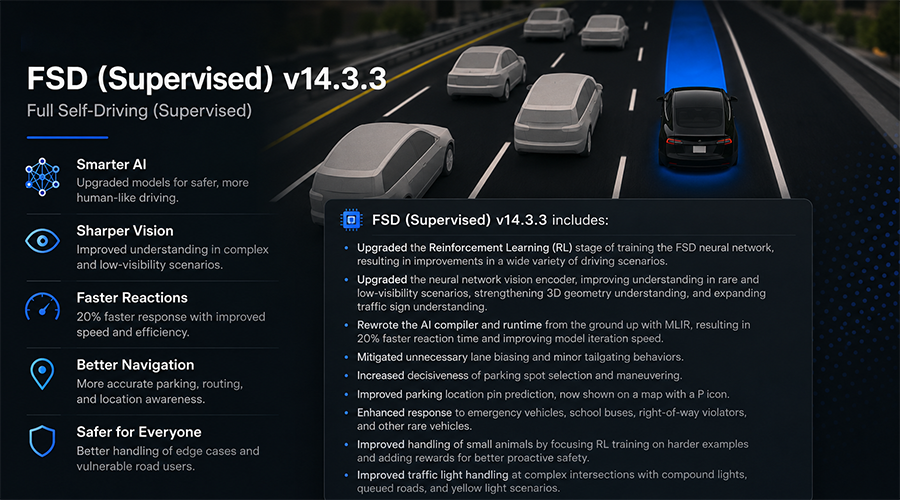
Tesla has introduced a subtle but notable change to its driver supervision system, with the latest Full Self-Driving (Supervised) update reducing the frequency of driver monitoring alerts, making the experience less intrusive for users.
The adjustment comes as part of FSD version 14.3.3, which refines how the system interacts with drivers using the cabin-facing camera. While Tesla’s driver monitoring system remains active, it now appears to be less “naggy” in how often it prompts drivers to pay attention, according to observations from the latest rollout.
Tesla’s cabin camera system is designed to ensure driver attentiveness while FSD (Supervised) is engaged. It monitors whether the driver is paying attention to the road and can issue warnings if attention is not maintained for extended periods.
Previously, the system has been known for frequent alerts intended to encourage constant supervision, sometimes prompting criticism from users who felt the warnings were overly sensitive. The latest update suggests Tesla is attempting to strike a balance between safety enforcement and user experience, while still maintaining the core requirement of driver supervision.
14.3.3 nags less too https://t.co/IuiWzuYO6O
— Elon Musk (@elonmusk) May 18, 2026
Despite the change, Tesla has not indicated any reduction in the system’s safety requirements. FSD (Supervised) continues to require active driver attention at all times, and the cabin camera remains a key component of Tesla’s monitoring approach.
The update follows Tesla’s ongoing iterative improvements to its Full Self-Driving suite, which continues to evolve through frequent software releases aimed at improving real-world driving behavior, neural network performance, and overall system refinement.
As Tesla continues to expand and refine FSD capabilities, adjustments like reduced monitoring prompts highlight the company’s effort to improve usability while maintaining its safety-first framework for supervised autonomy.
Share:
Are Tesla Model 3 Seat Covers Actually Worth It?
How Can I Make My 2024+ Model 3 Highland Look More Aggressive?