
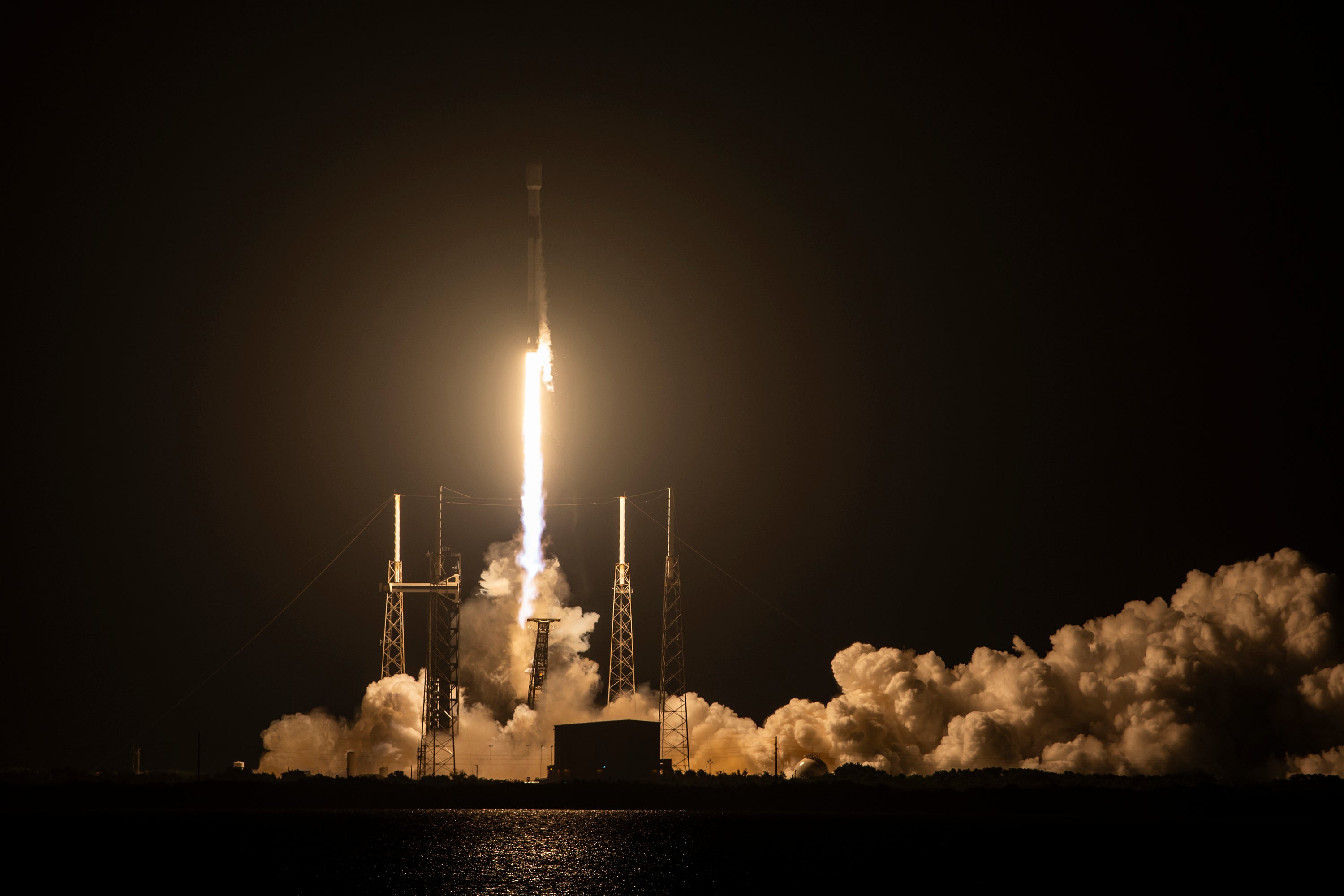
SpaceX launched the classified NROL-95 mission from Space Launch Complex 40 at Cape Canaveral Space Force Station early on July 30, then brought the Falcon 9 first stage back to Landing Zone 2. The company's short landing video showed the booster descending through its exhaust plume before settling onto the concrete pad.
"Falcon 9's first stage lands on LZ-2."
Why it matters
The visible part of NROL-95 was brief, but the mission sits at the intersection of two operating systems that now depend on speed. The National Reconnaissance Office needs repeatable access to orbit for national-security spacecraft. SpaceX needs landings that turn an expensive first stage into flight-proven inventory rather than ocean debris. A return-to-site landing compresses that process by putting the booster back near launch and inspection facilities.
What the official record confirms
The NRO's mission page identifies NROL-95 as a July 30 launch conducted with SpaceX, U.S. Space Force Space Systems Command, System Delta 80 and Space Launch Delta 45. It also confirms Falcon 9 as the launch vehicle and SLC-40 as the departure point. SpaceX's post confirms the first-stage landing at LZ-2. Together, those official sources establish the launch-and-recovery sequence without requiring guesses about the spacecraft.
That restraint is important. NROL mission payloads are commonly classified, and the public mission page does not identify NROL-95's orbit, sensor package or operational task. Outside trackers may offer theories, but a theory is not a payload manifest. The defensible story is that a national-security mission reached its launch phase and its Falcon 9 booster completed a controlled ground return.
The landing is the useful public data point
A booster landing does not reveal whether the classified satellite is healthy, and SpaceX's clip did not provide a post-deployment statement. It does show that the mission reserved enough first-stage performance for a return to Florida rather than a downrange droneship landing. The choice depends on mission energy requirements, recovery geometry and range planning; it should not be read as a universal option for every payload.
For SpaceX, the value is operational. Ground recoveries avoid a long tow back to port and reduce exposure to saltwater and offshore weather. The recovered stage still needs inspection, refurbishment and another assignment before reuse can be measured, but landing close to the pad removes part of the logistics chain. That is the less dramatic reason the video matters.
It also illustrates how launch cadence changes the meaning of success. A single spectacular landing once carried novelty value; a mature fleet is judged by whether recovery can happen repeatedly without disrupting the next customer. National-security launches add tighter coordination, controlled information and range requirements. Completing the public portion cleanly helps preserve schedule confidence even when most of the mission remains intentionally invisible publicly.
What's next
The NRO may publish a post-launch statement, but mission details are likely to remain limited. The next public evidence will instead come from Falcon 9's manifest: whether the recovered booster returns to flight, how quickly it does so and which mission receives it. Until then, NROL-95 is best understood as another example of reusable launch hardware becoming routine infrastructure for sensitive government missions.
The bottom line
NROL-95 kept its payload out of view, as expected. SpaceX made the recovery visible. That contrast captures the mission: classified work in orbit, followed by a very public demonstration that Falcon 9 can bring a major piece of the launch system home for another potential flight.
Related EVBASE links
Sources
SpaceX - Falcon 9 landing video on X
National Reconnaissance Office - official NROL-95 mission page
Share:
Tesla Diner Hits 1,600 Charging Sessions a Day
Still hesitating? Tesla Model Y L Launch Series Nears U.S. Sellout!