
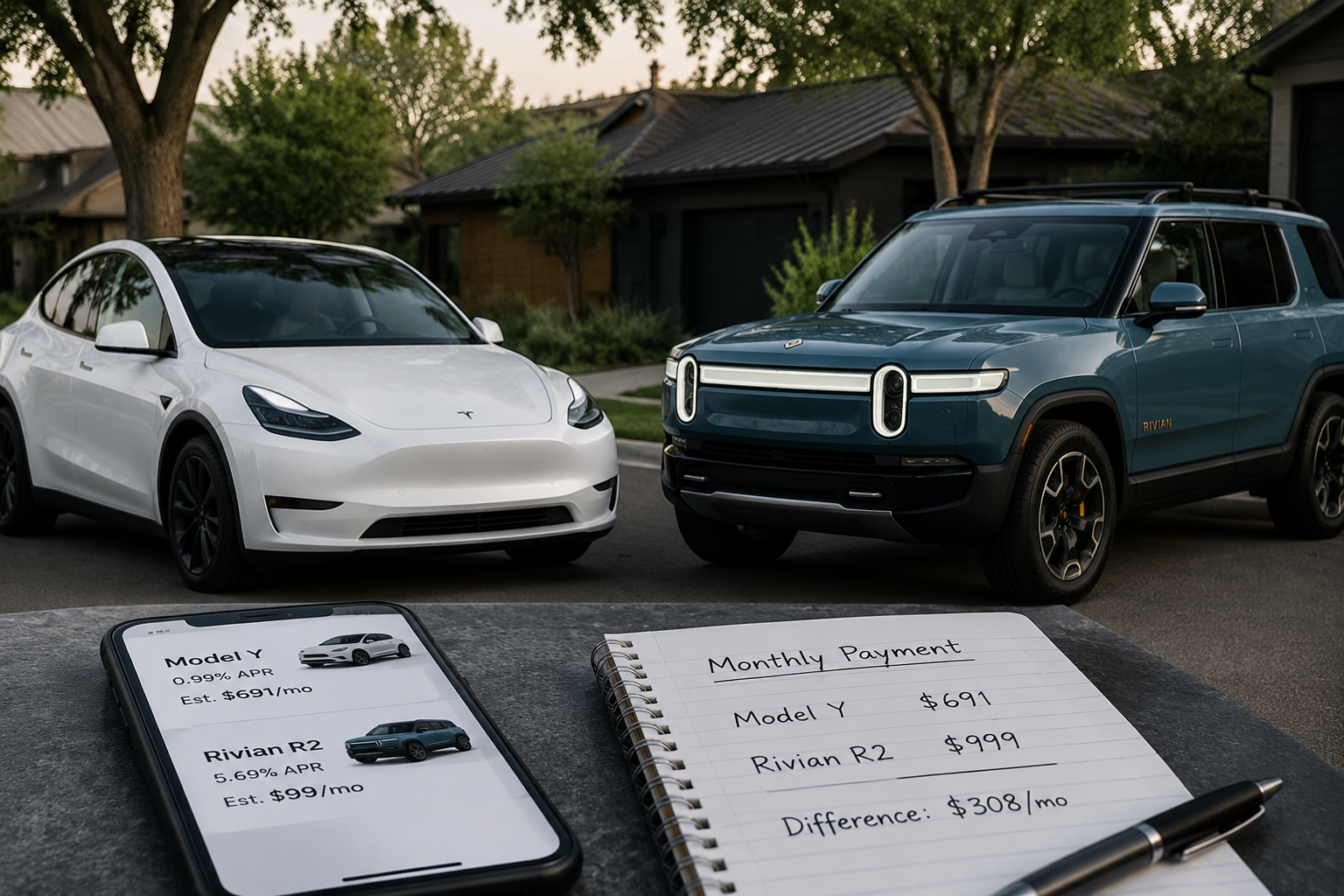
A prospective buyer comparing a Tesla Model Y with a Rivian R2 found a difference large enough to override personal preference. The July 21 estimates showed a $47,500 Model Y financed at 0.99% APR for about $691 per month, versus an approximately $60,000 Rivian R2 at 5.69% APR for about $999 per month. The result was a $308 monthly gap before considering insurance, charging, taxes or resale value.
The figures came from one shopper’s screens, not a universal comparison. They still capture a competitive reality: the advertised price is only one part of affordability. A manufacturer-supported rate can shift the payment enough to change which vehicle a household buys.
Why it matters
Rivian designed R2 to reach a wider audience than the R1T and R1S, but its early high-spec configurations remain close to premium-EV territory. Rivian says the R2 Performance with Launch Package starts at $57,990, while the later Premium trim is expected to start at $53,990. Tesla, meanwhile, is using promotional financing across much of the Model Y range, lowering the cost of borrowing for qualified buyers without cutting the displayed vehicle price by the same amount.
Tesla’s current U.S. offers list 0.99% APR for Model Y All-Wheel Drive, Premium Rear-Wheel Drive and Premium All-Wheel Drive for terms up to 72 months. The promotion requires excellent credit and a minimum down payment, and Tesla says rates can change or end at any time. That supports the shopper’s general financing premise, but it does not independently verify the exact $691 payment.
This is not an apples-to-apples vehicle test
The quoted vehicles may differ in equipment, performance, range and options. Loan term, down payment, taxes, trade-in equity, credit score and fees can change an estimate by hundreds of dollars. The 5.69% Rivian rate should be treated as that shopper’s offer, not Rivian’s standard rate. Buyers should compare out-the-door figures with the same down payment and loan length.
Payment reality check: $308 per month equals $22,176 over 72 months if the gap remains constant. That figure describes cash flow, not the full difference in ownership cost, because the vehicles may have different upfront prices, interest totals, insurance premiums and resale values.
The product decision goes beyond financing
The R2’s appeal is not difficult to understand. It offers a boxier adventure-oriented design, useful cargo ideas and a brand identity distinct from Tesla. The shopper explicitly preferred it emotionally. Tesla’s counterweight was the mature Model Y platform, a lower quoted purchase price, promotional financing and point-to-point Full Self-Driving capability that the buyer valued. FSD remains supervised, however, and should not be described as autonomous personal transportation.
For some households, the R2’s design and utility may justify a higher payment. Others will prioritize budget and Tesla’s software and charging ecosystem. The choice depends on ownership length and which features will actually be used.
What buyers should compare next
A serious comparison should lock the variables: identical loan term, identical down payment, taxes and fees included, realistic insurance quotes, expected charging costs and a clear list of must-have features. Buyers should also ask whether the promotional APR is available for the exact inventory vehicle and whether waiting for a lower-priced R2 configuration changes the result. The viral comparison is useful because it exposes the financing gap. The final decision still belongs in a spreadsheet built from each buyer’s actual approvals—not two headline prices.
Related EVBase reading
· Rivian R2 looks ready for families, but Tesla leads the self-driving conversation
· Rivian R2 shows why electric SUVs are moving toward outdoor use
· EVBASE Tesla, Rivian and EV news hub
Sources
· WHAT'S INSIDE?—Model Y and R2 financing comparison
Share:
Tesla Summer Update Sends Custom Wraps Through the Mobile App
Tesla Starts Cybercab Production as Robotaxi Network Reaches Seven U.S. Metros